🕷️ 🕷️🕷️🕷️🕷️
🕷️ Praying mantis: the elegant predator of the garden
🔍 Introduzione all’amantide religiosa
🔍 Introduction to the praying mantis
La mantide religiosa (Mantis religiosa) è un insetto appartenente all’ordine dei Mantodei. Nota per la sua postura caratteristica – con le zampe anteriori ripiegate come in preghiera – è uno dei predatori più affascinanti del mondo entomologico. Presente in gran parte dell’Europa, è facilmente osservabile nei giardini, negli orti e nei prati assolati, dove caccia altri insetti.
The praying mantis (Mantis religiosa) is an insect belonging to the order Mantodea. Known for its iconic posture — with its front legs folded as if in prayer — it is one of the most fascinating predators in the entomological world. Common across Europe, it can often be seen in gardens, vegetable plots, and sunny meadows where it hunts other insects.
🧬 Morfologia e caratteristiche fisiche
🧬 Morphology and physical features
L’amantide religiosa presenta un corpo allungato che può superare i 7 cm nelle femmine. Il colore varia dal verde al marrone, spesso in base all’habitat. La testa è triangolare e mobile, con grandi occhi composti che le permettono una visione stereoscopica. Le zampe anteriori raptatorie sono armate di spine per afferrare le prede.

The praying mantis has an elongated body that can exceed 7 cm in females. Its color ranges from green to brown, often depending on its habitat. The head is triangular and mobile, with large compound eyes that provide stereoscopic vision. The front raptorial legs are equipped with spines to catch and grip prey.
🧠 Comportamento predatorio e dieta
🧠 Predatory behavior and diet
La mantide è un predatore opportunista: si nutre di mosche, cavallette, api, farfalle e persino di altri mantidi. Attende immobile tra la vegetazione e colpisce con estrema velocità. È in grado di mimetizzarsi perfettamente nell’ambiente, rendendosi invisibile fino al momento dell’attacco.
The mantis is an opportunistic predator: it feeds on flies, grasshoppers, bees, butterflies, and even other mantises. It waits motionless among vegetation and strikes with lightning speed. It can camouflage perfectly into its surroundings, remaining invisible until the moment of attack.
🧬 Riproduzione e cannibalismo
🧬 Reproduction and cannibalism
Durante l’accoppiamento, è celebre il comportamento di cannibalismo sessuale: la femmina può decapitare o divorare il maschio. Dopo la fecondazione, depone un’ooteca (una capsula schiumosa) su rami o pietre. Da essa nasceranno decine di ninfe simili agli adulti.
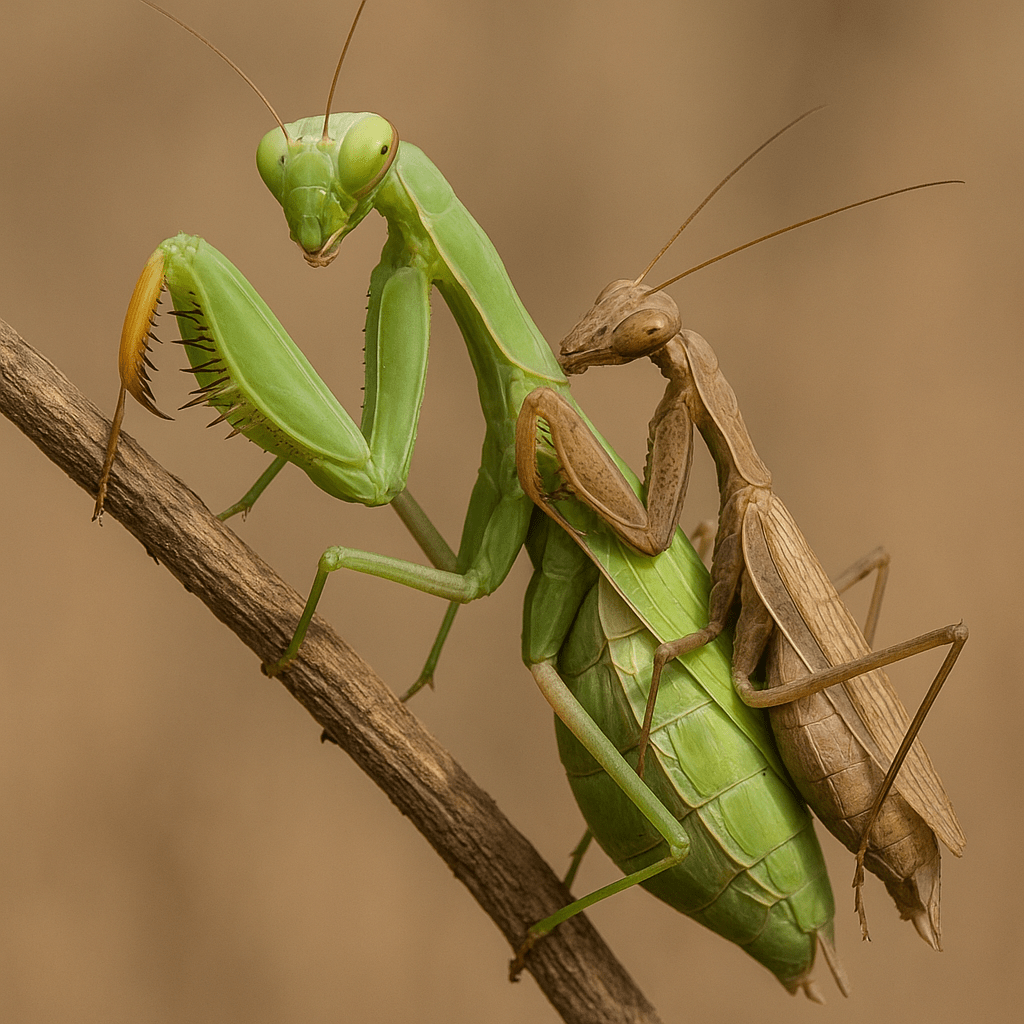
During mating, sexual cannibalism is common: the female may decapitate or devour the male. After fertilization, she lays an ootheca (a foamy capsule) on branches or stones. Dozens of nymphs resembling adults will hatch from it.
🌍 Habitat e distribuzione
🌍 Habitat and distribution
La Mantis religiosa è diffusa in Europa, Asia e Africa settentrionale. Ama i climi caldi e soleggiati, soprattutto aree aperte con vegetazione erbacea o arbustiva. In Italia è presente in tutte le regioni, anche in quota nei mesi estivi.
Mantis religiosa is widespread in Europe, Asia, and North Africa. It prefers warm, sunny climates, especially open areas with grassy or shrubby vegetation. In Italy, it is found in all regions, even at high altitudes during the summer months.
🌱 Ruolo ecologico e utilità nel giardino
🌱 Ecological role and usefulness in gardens
La mantide è un prezioso alleato per chi pratica agricoltura naturale o giardinaggio ecologico. Pur non distinguendo tra insetti utili e dannosi, mantiene sotto controllo molte popolazioni fitofaghe, contribuendo all’equilibrio ecologico del giardino.
The mantis is a valuable ally for those practicing natural farming or ecological gardening. Although it does not distinguish between beneficial and harmful insects, it helps control many herbivorous pest populations, contributing to the garden’s ecological balance.
⚠️ Curiosità e falsi miti
⚠️ Curiosities and common myths
- Falso: La mantide è velenosa.
Vero: Non ha veleno, né morsi pericolosi per l’uomo. - Falso: È un insetto sacro.
Vero: In alcune culture è simbolo di calma e pazienza, ma non ha significati religiosi universali.
- False: The mantis is venomous.
True: It has no venom and poses no danger to humans.- False: It is a sacred insect.
True: In some cultures, it symbolizes calm and patience, but it has no universal religious meaning.
📌 Conclusione
📌 Conclusion
L’amantide religiosa è un’insegna di biodiversità e un predatore elegante e misterioso che arricchisce i nostri spazi verdi. Rispettarla e riconoscerne l’importanza è un piccolo passo verso un giardinaggio più consapevole e sostenibile.
The praying mantis is a sign of biodiversity and an elegant, mysterious predator enriching our green spaces. Respecting it and acknowledging its role is a small step toward more conscious and sustainable gardening.
🧠 Parole chiave SEO consigliate:
amantide religiosa, mantide, mantide religiosa in giardino, insetti predatori utili, mantide europea, cannibalismo sessuale insetti, insetti verdi con zampe piegate
Se vuoi, posso generare anche una versione PDF dell’articolo o dividerlo in sezioni per il tuo sito WordPress. Fammi sapere!
 458socom.org
Rispondi