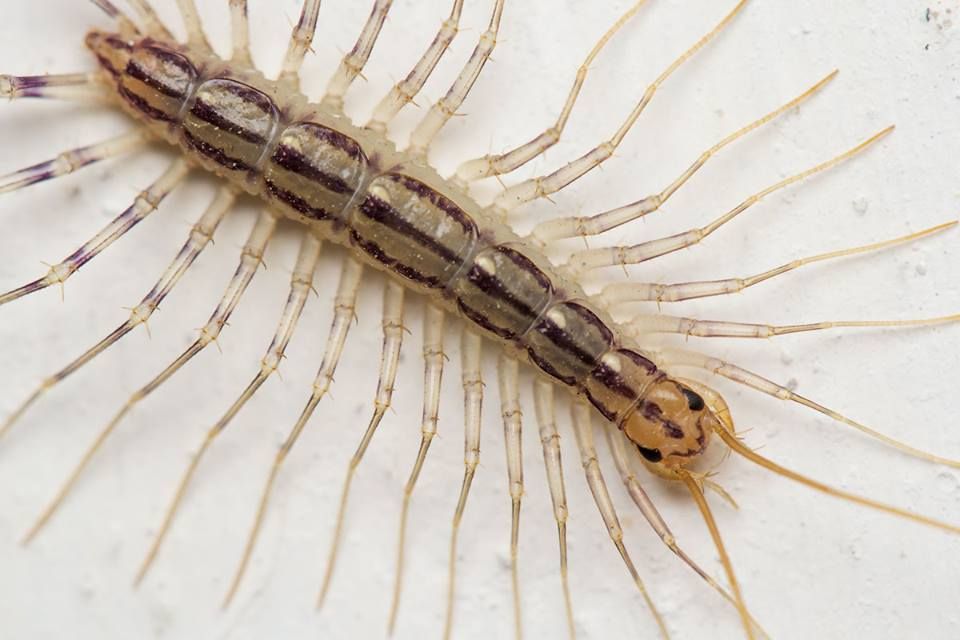
The House Centipede: The Silent Predator in Our Homes
🕷️ Introduzione
Introduction
La scutigera (Scutigera coleoptrata) è un millepiedi domestico facilmente riconoscibile grazie alle sue lunghe zampe e al movimento rapidissimo. Sebbene il suo aspetto possa incutere timore, è in realtà un alleato prezioso nella lotta contro gli insetti infestanti.
The house centipede (Scutigera coleoptrata) is a domestic myriapod easily recognized by its long legs and lightning-fast movements. Although its appearance may inspire fear, it is actually a valuable ally in controlling pest insects.
🔬 Aspetto e morfologia
Appearance and Morphology
La scutigera presenta un corpo lungo dai 2 ai 4 centimetri, appiattito e segmentato. È dotata di 15 paia di zampe lunghe e sottili, con le ultime che superano la lunghezza del corpo. Gli occhi sono ben sviluppati, caratteristica rara nei miriapodi.
The house centipede has a body length ranging from 2 to 4 centimeters, flattened and segmented. It possesses 15 pairs of long, slender legs, with the last pair exceeding its body length. Its well-developed eyes are an unusual trait among myriapods.

🌡️ Habitat e distribuzione
Habitat and Distribution
Originaria del bacino mediterraneo, la scutigera si è ormai diffusa in quasi tutto il mondo, grazie alla sua capacità di adattarsi agli ambienti domestici. Predilige luoghi umidi e bui come bagni, cantine e intercapedini.
Originally from the Mediterranean basin, the house centipede is now widespread around the world due to its ability to adapt to indoor environments. It prefers humid, dark places such as bathrooms, basements, and wall voids.
🍽️ Dieta e comportamento predatorio
Diet and Predatory Behavior
La scutigera è un predatore attivo e notturno. Si nutre di scarafaggi, ragni, formiche, termiti e altri artropodi. Utilizza le zampe anteriori trasformate in “forcipule” velenose per immobilizzare le prede.
The house centipede is an active nocturnal predator. It feeds on cockroaches, spiders, ants, termites, and other arthropods. It uses its front legs, modified into venomous “forcipules”, to immobilize its prey.
🤝 Relazione con l’uomo
Relationship with Humans
Nonostante l’aspetto minaccioso, la scutigera è innocua per l’uomo. Il suo morso è raro e, nella maggior parte dei casi, non penetra la pelle umana. Anzi, la sua presenza può essere un segno di ecosistema domestico equilibrato.
Despite its threatening appearance, the house centipede is harmless to humans. Its bite is rare and, in most cases, cannot pierce human skin. In fact, its presence can indicate a balanced indoor ecosystem.
🛠️ Controllo e convivenza
Control and Coexistence
Non è consigliabile eliminare le scutigere, se non in casi di infestazioni eccessive. Mantenere la casa asciutta, sigillare le fessure e ridurre la presenza di insetti può scoraggiare la loro presenza.
It is not advisable to eliminate house centipedes unless there’s a serious infestation. Keeping the house dry, sealing cracks, and reducing the presence of insects can naturally discourage them from settling in.
🐣 Ciclo vitale e riproduzione
Life Cycle and Reproduction
La scutigera depone le uova in ambienti umidi e sicuri. I giovani nascono con poche zampe e ne acquisiscono di nuove a ogni muta. Possono vivere fino a 3-5 anni, un’età considerevole per un artropode.
The house centipede lays eggs in moist and secure environments. Juveniles hatch with fewer legs and gain more with each molt. They can live up to 3–5 years, a considerable age for an arthropod.
🧠 Intelligenza e capacità sensoriali
Intelligence and Sensory Abilities
Grazie agli occhi ben sviluppati e alle antenne estremamente sensibili, la scutigera ha un’eccellente percezione dell’ambiente. La sua capacità di rilevare vibrazioni e odori la rende un’efficace cacciatrice.
Thanks to its well-developed eyes and extremely sensitive antennae, the house centipede has excellent environmental awareness. Its ability to detect vibrations and smells makes it a highly effective hunter.
🚨 Miti da sfatare
Common Myths Debunked
Molti credono che la scutigera sia velenosa per l’uomo, o che possa infestare i letti. In realtà, non cerca contatto umano e non rappresenta un pericolo diretto. Spesso è confusa con insetti meno innocui.
Many believe that the house centipede is venomous to humans or infests beds. In reality, it avoids human contact and poses no direct threat. It’s often confused with less harmless insects.
🌍 Ruolo ecologico
Ecological Role
La scutigera aiuta a mantenere sotto controllo la popolazione di insetti infestanti, fungendo da regolatore naturale. La sua presenza può contribuire a ridurre l’uso di insetticidi chimici in casa.
The house centipede helps control pest populations, acting as a natural regulator. Its presence can help reduce the need for chemical insecticides in homes.
🏡 Insetto utile o ospite sgradito?
Beneficial Bug or Unwanted Guest?
Dipende dalla prospettiva: chi riesce a tollerarne l’aspetto potrà godere della sua funzione ecologica. Per altri, resta un ospite indesiderato ma innocuo, da gestire con rispetto.
It depends on perspective: those who can tolerate its appearance may benefit from its ecological role. For others, it remains an unwanted yet harmless guest to manage respectfully.
📌 Conclusione
Conclusion
La scutigera è molto più di un insetto spaventoso: è un efficiente predatore, un indicatore ambientale e un potenziale alleato domestico. Comprenderla è il primo passo per conviverci con serenità.
The house centipede is much more than a scary-looking insect: it is an efficient predator, an environmental indicator, and a potential domestic ally. Understanding it is the first step toward peaceful coexistence.
 458socom.org
Rispondi