🧐🧐🧐
Megarhyssa macrurus: the Wasp with the Infinite Stinger
🟡 Introduzione / Introduction
IT
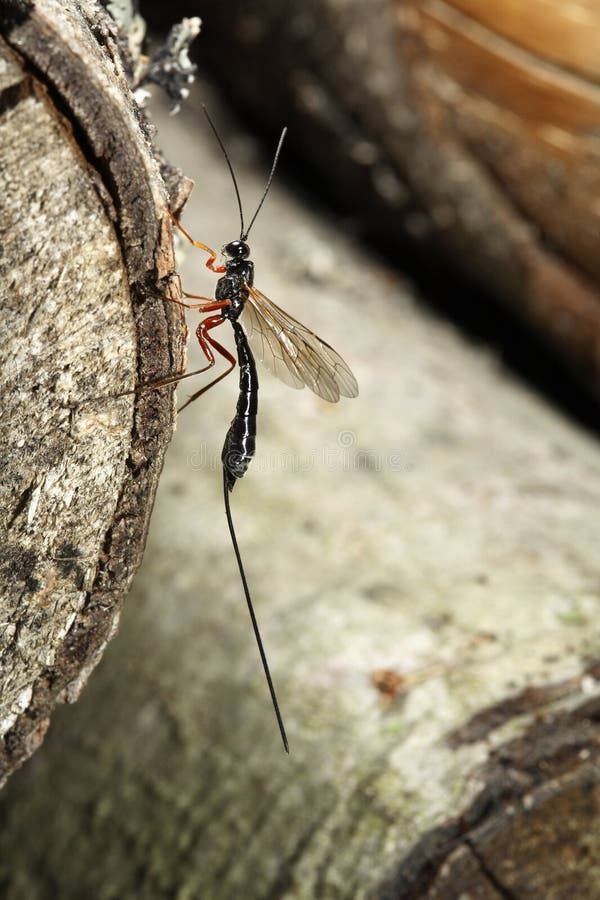
Tra le vespe più affascinanti ma sconosciute al grande pubblico, Megarhyssa macrurus occupa un posto speciale. Appartenente alla famiglia Ichneumonidae, è famosa per il suo ovopositore lunghissimo, spesso confuso con un pungiglione, che può superare la lunghezza del suo stesso corpo. In realtà, questa struttura non è usata per la difesa, ma per infiltrarsi nel legno e deporre uova dentro larve di insetti xilofagi.
EN
Among the most fascinating yet little-known wasps, Megarhyssa macrurus holds a special place. Belonging to the Ichneumonidae family, it is famous for its extremely long ovipositor, often mistaken for a stinger, which can exceed the length of its body. This structure is not used for defense but to penetrate wood and lay eggs inside the larvae of wood-boring insects.
🔍 Aspetto morfologico / Morphological Appearance
IT
La Megarhyssa macrurus è una vespa snella, con ali trasparenti, corpo brunastro, e bande gialle sull’addome. La femmina è immediatamente riconoscibile per l’ovopositore, lungo anche 10–12 cm, mentre il corpo misura circa 4–5 cm. Il maschio è più piccolo e non possiede ovopositore.
EN
Megarhyssa macrurus is a slender wasp with transparent wings, a brownish body, and yellow bands on the abdomen. The female is easily recognized by her ovipositor, which can be 10–12 cm long, while her body measures around 4–5 cm. The male is smaller and lacks an ovipositor.
🌲 Habitat e distribuzione / Habitat and Distribution
IT
Questa vespa è comune nei boschi decidui del Nord America, soprattutto dove vi sono alberi morti o morenti, ricchi di larve xilofaghe. Ama ambienti umidi, ombrosi e poco disturbati. Spesso passa inosservata, ma può essere avvistata mentre “sonda” i tronchi con movimenti delicati e concentrazione impressionante.
EN
This wasp is common in deciduous forests of North America, especially where dead or dying trees host wood-boring larvae. It prefers humid, shaded, and undisturbed environments. Often overlooked, it can be seen carefully “probing” tree trunks with impressive precision and focus.
🧬 Ciclo biologico e comportamento / Life Cycle and Behavior
1. La scelta del sito / Site Selection
IT
La femmina individua le larve nascoste nel legno grazie a vibrazioni e segnali chimici. Il suo ovopositore è dotato di recettori estremamente sensibili. Una volta individuato il punto esatto, inizia a perforare il legno, azione che può richiedere anche mezz’ora.
EN
The female detects hidden larvae in wood using vibrations and chemical cues. Her ovipositor is equipped with highly sensitive receptors. Once the exact spot is located, she begins to drill through the wood, a process that can take up to half an hour.
2. Deposizione delle uova / Egg Laying
IT
L’ovopositore è formato da tre parti: due guaine protettive e una sottile struttura centrale simile a un ago. Una volta raggiunta la larva bersaglio, l’uovo viene depositato direttamente all’interno del corpo della preda, che resta viva ma paralizzata.
EN
The ovipositor consists of three parts: two protective sheaths and a central, needle-like shaft. Once the host larva is reached, the egg is laid directly inside its body, which remains alive but paralyzed.
3. Sviluppo larvale / Larval Development
IT
La larva di Megarhyssa si sviluppa lentamente all’interno del corpo dell’ospite, nutrendosene senza danneggiarne organi vitali fino all’ultimo stadio. Quando è pronta a impuparsi, l’ospite muore e la vespa emerge dal tronco come adulto.
EN
The Megarhyssa larva develops inside the host’s body, feeding on it without damaging vital organs until the final stage. When ready to pupate, the host dies and the adult wasp emerges from the trunk.
🔬 Meccanismo di perforazione / Drilling Mechanism
IT
Il modo in cui questa vespa riesce a forare il legno duro senza rompersi l’ovopositore ha stupito anche gli ingegneri. Il movimento è basato su oscillazioni alternate delle due guaine laterali, che spingono l’ago in profondità in modo sicuro. Questo sistema ha ispirato prototipi di microsonde chirurgiche.
EN
How this wasp manages to drill through hard wood without breaking its ovipositor has amazed engineers. The movement relies on alternating oscillations of the two lateral sheaths, pushing the central needle deeper safely. This system has inspired prototypes of surgical microsyringes.
🧠 Intelligenza ecologica / Ecological Intelligence
IT
Megarhyssa non depone a caso: ogni deposizione è calibrata su età, dimensione e posizione della larva ospite. Questo comporta un notevole grado di selettività comportamentale. Si tratta di una forma di “intelligenza ecologica” che la rende un’alleata preziosa contro i parassiti del legno.
EN
Megarhyssa does not lay eggs randomly: each deposition is based on the age, size, and position of the host larva. This involves a high level of behavioral selectivity. It’s a form of “ecological intelligence” that makes it a valuable ally against wood pests.
⚠️ Falsi miti e paura infondata / Myths and Misconceptions
IT
A causa del suo aspetto impressionante, la Megarhyssa viene spesso temuta e uccisa inutilmente. In realtà è totalmente innocua per l’uomo: non punge, non è aggressiva e non difende il nido come le vespe sociali. Il lungo “pungiglione” serve solo a deporre uova.
EN
Due to its dramatic appearance, Megarhyssa is often feared and killed unnecessarily. In reality, it is completely harmless to humans: it doesn’t sting, isn’t aggressive, and doesn’t defend nests like social wasps. The long “stinger” is solely for egg-laying.
🐛 Ruolo ecologico / Ecological Role
IT
La Megarhyssa svolge un ruolo fondamentale come regolatore naturale delle popolazioni di insetti xilofagi, come le larve di horntail (Tremex columba). In ambienti forestali, contribuisce al controllo biologico e al riciclo della materia organica.
EN
Megarhyssa plays a vital role as a natural regulator of wood-boring insect populations, such as horntail larvae (Tremex columba). In forest environments, it contributes to biological control and organic matter recycling.
🧭 Interazioni con l’uomo / Human Interaction
IT
Questa vespa, pur essendo poco nota, potrebbe avere applicazioni in lotta biologica e bioingegneria. Inoltre, studiarla insegna il valore degli insetti “invisibili” nel mantenere l’equilibrio degli ecosistemi. Proteggerla è una scelta intelligente e sostenibile.
EN
This wasp, although little known, may have applications in biological control and bioengineering. Moreover, studying it highlights the value of “invisible” insects in maintaining ecosystem balance. Protecting it is a smart and sustainable choice.
🧪 Curiosità scientifiche / Scientific Curiosities
- IT: L’ovopositore di Megarhyssa è più lungo di qualsiasi altro insetto noto.
EN: Megarhyssa’s ovipositor is the longest known among insects. - IT: Le sue perforazioni sono così precise che i ricercatori le usano per mappare la densità larvale nei tronchi.
EN: Its drilling is so precise that researchers use it to map larval density inside logs. - IT: È un esempio perfetto di coevoluzione tra predatore e preda.
EN: It’s a perfect example of coevolution between predator and prey.
✅ Conclusione / Conclusion
IT
Megarhyssa macrurus è la dimostrazione che anche una vespa sconosciuta può rivelare un universo di comportamenti sofisticati, adattamenti evolutivi e applicazioni tecnologiche. È un simbolo della biodiversità che vale la pena proteggere, studiare e raccontare.
EN
Megarhyssa macrurus shows that even an unknown wasp can reveal a universe of sophisticated behaviors, evolutionary adaptations, and technological applications. It’s a symbol of biodiversity worth protecting, studying, and sharing.
 458socom.org
Rispondi