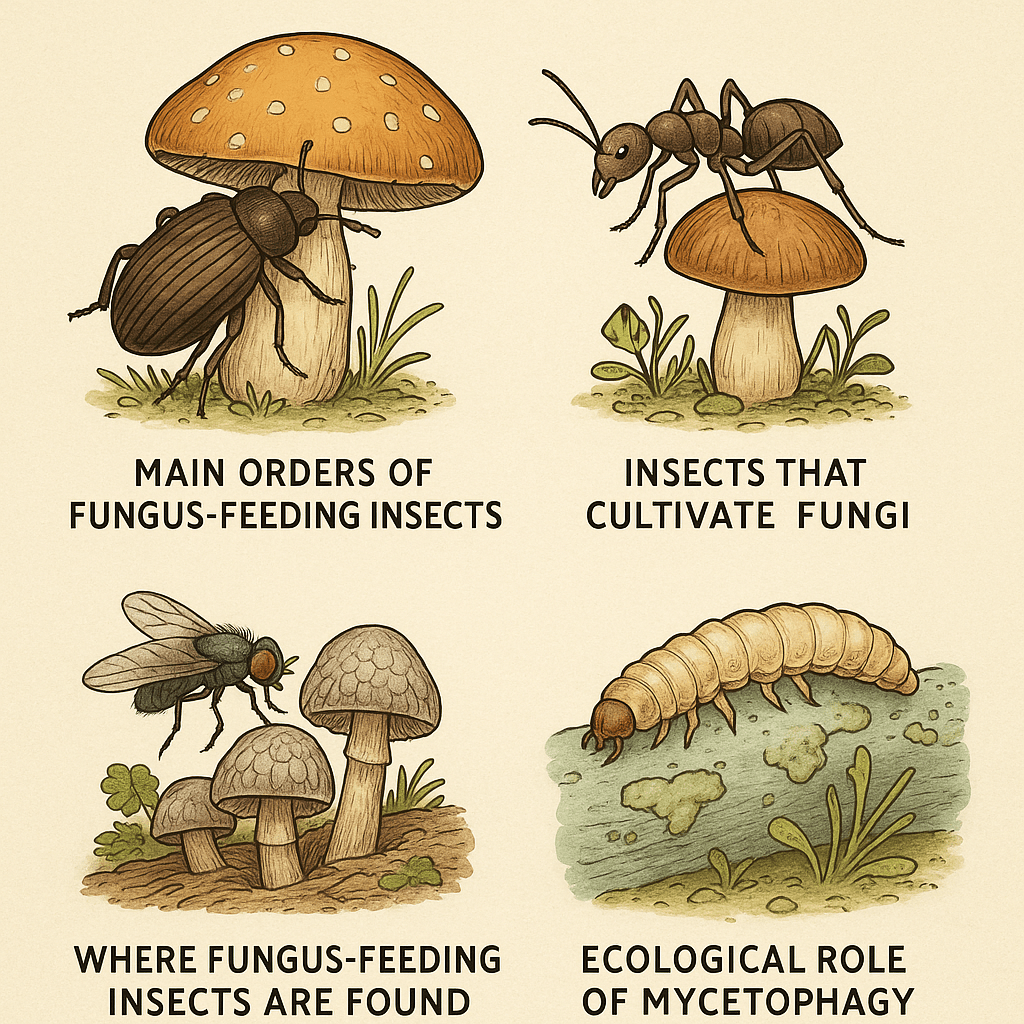
Mycetophagy: The World of Fungus-Feeding Insects
1. Introduzione alla micetofagia
1. Introduction to Mycetophagy
IT: La micetofagia è una strategia alimentare in cui alcuni insetti si nutrono principalmente di funghi. Questo comportamento è più diffuso di quanto si pensi, e rappresenta un’interazione ecologica fondamentale per la decomposizione della materia organica, la formazione del suolo e il ciclo dei nutrienti.
EN: Mycetophagy is a feeding strategy in which some insects primarily consume fungi. This behavior is more widespread than commonly believed and represents a key ecological interaction in organic matter decomposition, soil formation, and nutrient cycling.
2. Dove si trovano gli insetti micetofagi
2. Where Fungus-Feeding Insects Are Found
IT: Gli insetti micetofagi sono presenti in habitat umidi, ricchi di lettiera, tronchi marcescenti e miceli attivi. Foreste, boschi misti, torbiere e persino ambienti urbani ospitano queste creature. Alcuni vivono all’interno dei funghi stessi, altri ne colonizzano solo temporaneamente la superficie o le spore.
EN: Mycetophagous insects are found in humid habitats rich in leaf litter, decaying logs, and active mycelial networks. Forests, mixed woodlands, peat bogs, and even urban areas host these creatures. Some live inside the fungi, while others colonize only the surface or feed on spores.
3. Principali ordini di insetti micetofagi
3. Main Orders of Fungus-Feeding Insects
IT:
La micetofagia è stata osservata in diversi ordini di insetti. Tra i più rappresentativi:
- Coleoptera (scarabei, coccinelle, tenebrionidi): alcune specie dei generi Mycetophagus, Cis e Octotemnus si nutrono esclusivamente di funghi lignicoli.
- Diptera (mosche): le larve di famiglie come Mycetophilidae e Sciaridae si sviluppano nei corpi fruttiferi dei funghi.
- Hymenoptera (vespe, formiche): alcune formiche coltivano funghi come fonte di cibo (es. formiche tagliafoglie).
- Lepidoptera: certe larve di falene minano i funghi o si nutrono di spore.
- Psocoptera e Thysanura: piccoli insetti primitivi che si nutrono anche di muffe e lieviti.
EN:
Mycetophagy has been observed in several insect orders. Among the most representative:
- Coleoptera (beetles): species in the genera Mycetophagus, Cis, and Octotemnus feed exclusively on wood-decaying fungi.
- Diptera (flies): larvae from families such as Mycetophilidae and Sciaridae develop inside fungal fruiting bodies.
- Hymenoptera (wasps, ants): some ants cultivate fungi as a primary food source (e.g., leaf-cutter ants).
- Lepidoptera (moths): some moth larvae mine into fungi or feed on spores.
- Psocoptera and Thysanura: primitive insects that also feed on molds and yeasts.
4. Adattamenti fisiologici e comportamentali
4. Physiological and Behavioral Adaptations
IT:
Gli insetti micetofagi hanno sviluppato:
- Mandibole robuste per masticare tessuti fungini coriacei.
- Enzimi digestivi specializzati per degradare la chitina fungina.
- Comportamenti gregari: alcune specie vivono in gruppi all’interno dello stesso fungo.
- Selettività: molti scelgono specifici funghi, spesso in base allo stadio di maturazione o alla consistenza.
EN:
Mycetophagous insects have evolved:
- Strong mandibles to chew tough fungal tissues.
- Specialized digestive enzymes to break down fungal chitin.
- Gregarious behavior: some species live in groups within the same fungus.
- Selectivity: many choose specific fungi based on maturity or texture.
5. Insetti che coltivano funghi
5. Insects that Cultivate Fungi
IT:
Un caso straordinario di micetofagia è la fungicoltura degli insetti, osservata in formiche, termiti e alcuni scarabei. Questi insetti non si limitano a raccogliere funghi, ma li coltivano attivamente su substrati vegetali. Le formiche attine, ad esempio, tagliano foglie per alimentare colture fungine, che poi consumano.
EN:
An extraordinary case of mycetophagy is fungus cultivation by insects, observed in ants, termites, and some beetles. These insects don’t just gather fungi—they actively grow them on plant substrates. For instance, attine ants cut leaves to feed fungal gardens, which they later consume.
6. Ruolo ecologico della micetofagia
6. Ecological Role of Mycetophagy
IT:
Gli insetti micetofagi:
- Accelerano la decomposizione di legno e fogliame.
- Diffondono spore fungine, contribuendo alla dispersione del micelio.
- Stabiliscono relazioni mutualistiche con funghi specifici.
- Servono da cibo per predatori e parassitoidi, integrando le reti trofiche del suolo.
EN:
Mycetophagous insects:
- Accelerate decomposition of wood and leaf litter.
- Spread fungal spores, aiding mycelial dispersion.
- Establish mutualistic relationships with specific fungi.
- Serve as food for predators and parasitoids, supporting soil food webs.
7. Micetofagia e controllo biologico
7. Mycetophagy and Biological Control
IT:
Alcuni insetti micetofagi sono usati nel controllo biologico di funghi patogeni. Ad esempio, coleotteri e acari possono ridurre la diffusione di agenti micotici dannosi in serre e colture, predando miceli infestanti.
EN:
Some mycetophagous insects are used in the biological control of pathogenic fungi. For example, beetles and mites can reduce the spread of harmful fungal agents in greenhouses and crops by preying on invasive mycelia.
8. Micetofagia negli ambienti antropizzati
8. Mycetophagy in Human-Modified Environments
IT:
In ambienti urbani e agricoli, la micetofagia può segnalare buona qualità del suolo o presenza di funghi infestanti. Alcune specie invadono cantine, compostiere o magazzini, dove muffe e lieviti prosperano. La loro presenza può aiutare a monitorare condizioni igieniche e di umidità.
EN:
In urban and agricultural environments, mycetophagy may indicate good soil quality or fungal infestations. Some species invade basements, compost piles, or storage facilities where molds and yeasts thrive. Their presence can help monitor hygiene and moisture conditions.
9. Minacce alla micetofagia: pesticidi e degrado
9. Threats to Mycetophagy: Pesticides and Degradation
IT:
L’uso eccessivo di fungicidi e la perdita di habitat boschivi stanno riducendo la diversità di insetti micetofagi. L’eliminazione dei funghi, anche quelli non patogeni, compromette catene alimentari fondamentali nel sottobosco. La deforestazione, la bonifica dei suoli e la sterilizzazione delle coltivazioni impoveriscono questi ecosistemi invisibili.
EN:
Overuse of fungicides and the loss of forest habitats are reducing the diversity of mycetophagous insects. The removal of fungi, even non-pathogenic ones, disrupts vital food chains in the undergrowth. Deforestation, soil reclamation, and crop sterilization impoverish these invisible ecosystems.
10. Curiosità e record
10. Curiosities and Records
IT:
- Il coleottero Cis boleti può completare il suo ciclo vitale in meno di 30 giorni dentro un singolo fungo.
- Alcuni sciaroidi formano larve luminescenti visibili nel buio dei tronchi marci.
- Le formiche attine riescono a mantenere vive le loro colture fungine per generazioni, con comportamenti “agricoli” complessi.
EN:
- The beetle Cis boleti can complete its life cycle in under 30 days inside a single fungus.
- Some sciarid larvae are bioluminescent and visible in the darkness of rotting logs.
- Attine ants maintain their fungal crops for generations, exhibiting complex “farming” behavior.
11. Conclusione: perché studiare la micetofagia
11. Conclusion: Why Study Mycetophagy
IT:
La micetofagia è un fenomeno affascinante e cruciale per comprendere gli equilibri ecologici dei microhabitat terrestri. Studiare gli insetti che si nutrono di funghi ci permette di monitorare la salute del suolo, prevenire malattie vegetali, proteggere la biodiversità e scoprire nuovi potenziali alleati nell’agricoltura sostenibile.
EN:
Mycetophagy is a fascinating and crucial phenomenon for understanding the ecological balance of terrestrial microhabitats. Studying fungus-feeding insects allows us to monitor soil health, prevent plant diseases, protect biodiversity, and discover new potential allies in sustainable agriculture.
 458socom.org
Rispondi