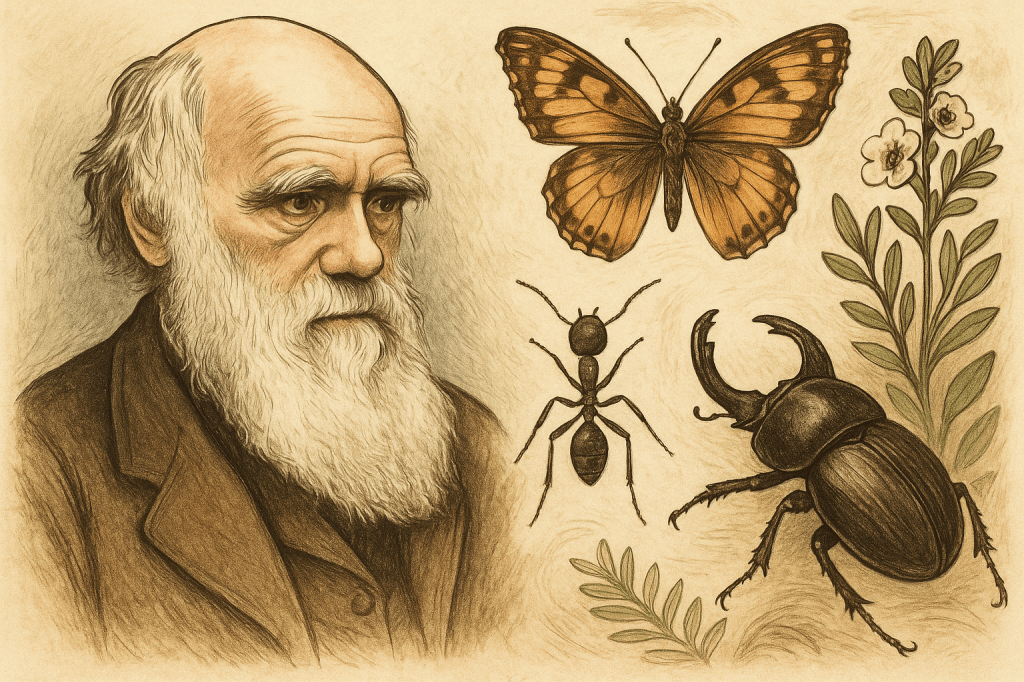
🐜 Darwin and Entomology: A Deep Connection That Still Teaches Us Today
1. Introduzione
Introduction
Charles Darwin è universalmente noto per la teoria dell’evoluzione per selezione naturale. Tuttavia, pochi sanno che la sua passione per l’entomologia — lo studio degli insetti — è stata una delle fondamenta della sua visione scientifica.
Charles Darwin is universally known for the theory of evolution by natural selection. However, few people realize that his passion for entomology — the study of insects — was one of the foundations of his scientific vision.
La biologia evolutiva e l’entomologia condividono un legame profondo: osservare la diversità, capire l’adattamento e cogliere le strategie di sopravvivenza.
Evolutionary biology and entomology share a deep connection: observing diversity, understanding adaptation, and grasping survival strategies.
2. Darwin: entomologo per passione
Darwin: A Passionate Entomologist
Molto prima di salpare sul Beagle, Darwin collezionava insetti con entusiasmo. Durante gli anni universitari a Cambridge, si dedicava con passione alla raccolta di coleotteri. Questa attività, apparentemente semplice, stimolò il suo senso dell’osservazione e lo introdusse al mondo della biodiversità.
Long before setting sail on the Beagle, Darwin collected insects enthusiastically. During his university years at Cambridge, he devoted himself to beetle collecting. This seemingly simple activity stimulated his observational skills and introduced him to the world of biodiversity.
Per Darwin, ogni insetto rappresentava un enigma. Come si era evoluto? Perché aveva certe forme o colori? Domande che trovarono risposta anni dopo nella sua teoria dell’evoluzione.
For Darwin, each insect was a puzzle. How had it evolved? Why did it have certain shapes or colors? Questions that would later be answered through his theory of evolution.
3. Selezione naturale tra ali e antenne
Natural Selection Between Wings and Antennae
Gli insetti sono maestri dell’adattamento. Dalle formiche che coltivano funghi ai coleotteri corazzati, ogni specie rappresenta un esempio vivente di selezione naturale in azione.
Insects are masters of adaptation. From ants that cultivate fungi to armored beetles, each species is a living example of natural selection in action.
Darwin stesso osservava come piccoli cambiamenti nei tratti corporei potessero portare a grandi differenze nel successo riproduttivo. Gli insetti, con i loro cicli di vita brevi e l’enorme varietà, erano il banco di prova ideale per queste idee.
Darwin himself observed how small changes in body traits could lead to major differences in reproductive success. Insects, with their short life cycles and vast variety, were the ideal testing ground for these ideas.
4. Mimicry, mimetismo e inganno
Mimicry, Camouflage, and Deception
Un altro punto d’incontro tra Darwinismo e entomologia è il mimetismo. Alcuni insetti si fingono foglie, altri assumono l’aspetto di specie velenose per difendersi.
Another point of intersection between Darwinism and entomology is mimicry. Some insects pretend to be leaves, while others take on the appearance of poisonous species for defense.
Questi inganni visivi non sono casuali. Si sono evoluti perché davano un vantaggio selettivo. Le farfalle che imitano le specie tossiche sono meno predate: un chiaro esempio di selezione naturale.
These visual tricks are not random. They evolved because they provided a selective advantage. Butterflies that mimic toxic species are less preyed upon: a clear example of natural selection.
5. Coevoluzione: fiori e insetti si influenzano a vicenda
Coevolution: Flowers and Insects Shaping Each Other
Un altro insegnamento darwiniano applicabile all’entomologia è la coevoluzione. Molti insetti impollinatori e fiori si sono evoluti insieme, influenzandosi reciprocamente.
Another Darwinian lesson applicable to entomology is coevolution. Many pollinating insects and flowers have evolved together, influencing each other.
Darwin studiò a lungo l’orchidea della stella di Natale del Madagascar, ipotizzando l’esistenza di una falena con una proboscide lunga abbastanza da raggiungere il nettare. Anni dopo, l’insetto fu scoperto.
Darwin studied the Angraecum sesquipedale orchid, predicting the existence of a moth with a long enough proboscis to reach its nectar. Years later, the insect was discovered.
6. Insetti come modelli di evoluzione rapida
Insects as Models of Rapid Evolution
Grazie alla loro prolificità e ai cicli di vita brevi, gli insetti sono perfetti per osservare l’evoluzione in tempo reale.
Thanks to their prolific reproduction and short life cycles, insects are perfect for observing evolution in real time.
Un esempio moderno è l’evoluzione della resistenza agli insetticidi. Le popolazioni di afidi, zanzare o mosche diventano resistenti in poche generazioni.
A modern example is the evolution of resistance to insecticides. Populations of aphids, mosquitoes, or flies become resistant in just a few generations.
Questo è Darwin puro: variazione, selezione e trasmissione.
This is pure Darwinism: variation, selection, and inheritance.
7. Il contributo degli insetti alla biogeografia
Insects and the Power of Biogeography
Durante il viaggio sul Beagle, Darwin notò come certi insetti fossero endemici di alcune isole, altri distribuiti globalmente.
During his voyage on the Beagle, Darwin noticed how certain insects were endemic to specific islands, while others were globally distributed.
Gli insetti gli insegnarono che la distribuzione geografica delle specie rifletteva la loro storia evolutiva, i vincoli ambientali e le possibilità di dispersione.
Insects taught him that the geographical distribution of species reflected their evolutionary history, environmental constraints, and dispersal opportunities.
8. L’importanza della variazione tra individui
The Importance of Variation Among Individuals
Per Darwin, la variazione era il motore dell’evoluzione. E negli insetti, la variazione abbonda: colori, dimensioni, comportamenti, cicli vitali.
For Darwin, variation was the engine of evolution. And in insects, variation abounds: colors, sizes, behaviors, life cycles.
Ogni differenza può rappresentare un vantaggio o uno svantaggio, e col tempo plasmare l’intera popolazione.
Every difference can represent an advantage or disadvantage, and over time shape the entire population.
9. Insetti sociali e comportamento evoluto
Social Insects and Advanced Behavior
Le formiche, le api e le termiti rappresentano un vertice nell’evoluzione del comportamento.
Ants, bees, and termites represent a pinnacle in behavioral evolution.
Darwin intuì che la selezione naturale poteva operare anche su gruppi sociali, non solo sugli individui.
Darwin intuited that natural selection could also act on social groups, not just individuals.
Il concetto di “altruismo evolutivo” nacque anche grazie allo studio degli insetti sociali, dove l’individuo sacrifica sé stesso per il bene della colonia.
The concept of “evolutionary altruism” was born also thanks to the study of social insects, where individuals sacrifice themselves for the colony’s benefit.
10. Cosa possiamo imparare oggi da Darwin e dagli insetti
What We Can Still Learn from Darwin and Insects
Oggi, in piena crisi climatica e perdita di biodiversità, la lezione darwiniana è più attuale che mai.
Today, amid climate crisis and biodiversity loss, Darwin’s lesson is more relevant than ever.
Osservare gli insetti — le loro risposte ai cambiamenti, la loro capacità di adattarsi o scomparire — ci offre un termometro dell’evoluzione in atto.
Observing insects — their responses to change, their ability to adapt or vanish — gives us a thermometer of evolution in progress.
11. Un’eredità scientifica ancora viva
A Living Scientific Legacy
Darwin non fu solo un naturalista: fu uno scienziato visionario che trasformò l’osservazione di un coleottero in un’ipotesi rivoluzionaria.
Darwin was not just a naturalist: he was a visionary scientist who turned the observation of a beetle into a revolutionary hypothesis.
Ogni entomologo, ogni manutentore del verde, ogni studente di scienze naturali può trarre ispirazione dal suo metodo: osservare, confrontare, interrogarsi.
Every entomologist, gardener, and natural science student can draw inspiration from his method: observe, compare, and question.
12. Conclusione: Darwinismo applicato al mondo moderno
Conclusion: Darwinism Applied to the Modern World
Nel mondo odierno, capire l’evoluzione non è solo un esercizio accademico: è una necessità. La resistenza agli insetticidi, la scomparsa degli impollinatori, l’adattamento degli insetti invasivi… tutto parla il linguaggio di Darwin.
In today’s world, understanding evolution is not just an academic exercise: it’s a necessity. Insecticide resistance, pollinator decline, invasive insect adaptation… all speak Darwin’s language.
L’entomologia moderna è figlia di Darwin. E ogni insetto che osserviamo oggi continua a raccontare quella storia iniziata più di 150 anni fa.
Modern entomology is Darwin’s legacy. And every insect we observe today continues to tell that story begun over 150 years ago.
Titolo SEO alternativo:
“Darwin ed Entomologia: Come gli Insetti Hanno Ispirato l’Evoluzione”
“Darwin and Insects: How Entomology Shaped the Theory of Evolution”
 458socom.org
Rispondi