🤔
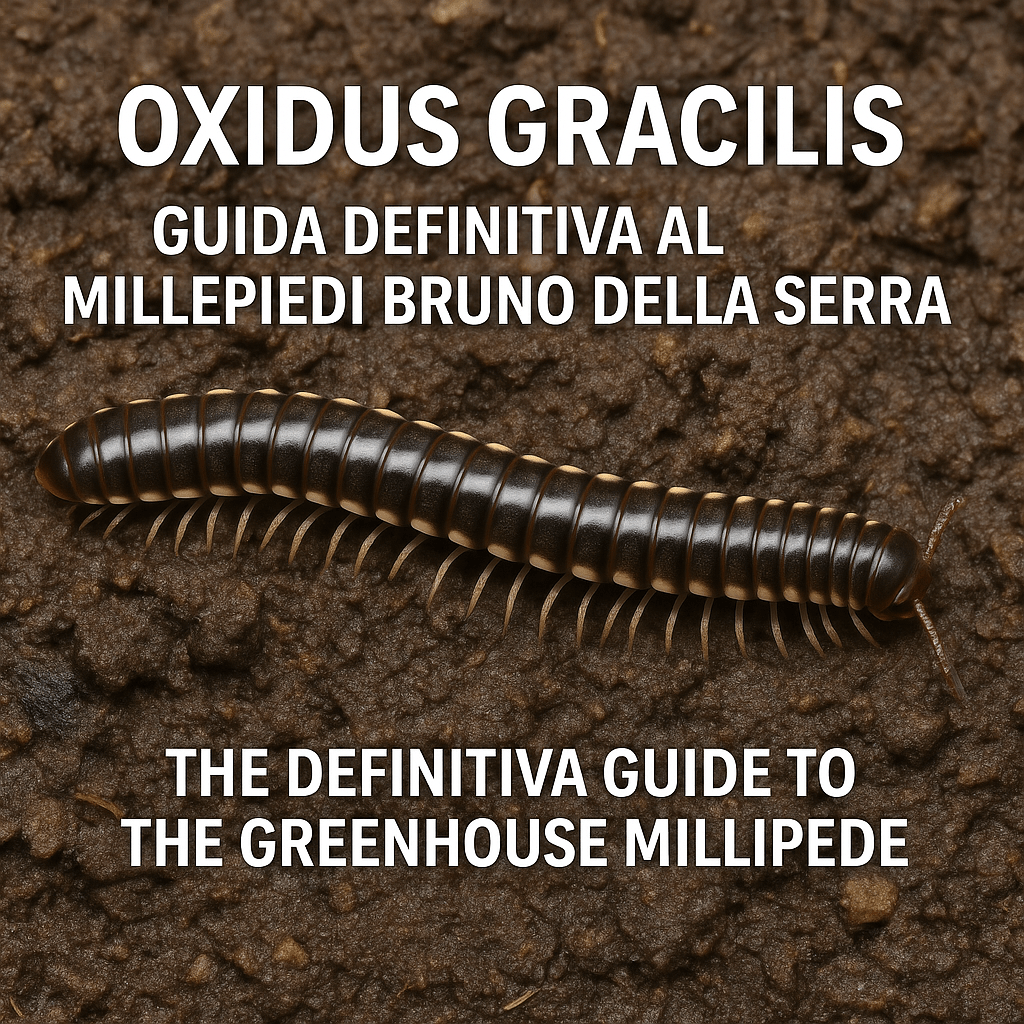
🪱 Oxidus gracilis: the definitive guide to the greenhouse millipede
✅ Introduzione
✅ Introduction
Oxidus gracilis, comunemente noto come millepiedi bruno della serra, è un artropode cosmopolita originario dell’Asia tropicale, oggi diffuso in tutti i continenti. La sua presenza è tipica in serre, giardini urbani, orti e aree umide con vegetazione densa.
Oxidus gracilis, commonly known as the greenhouse millipede, is a cosmopolitan arthropod originally from tropical Asia. Today, it is found on every continent. It typically inhabits greenhouses, urban gardens, vegetable patches, and moist areas with dense vegetation.
🔍 Aspetto morfologico
🔍 Morphological features
- Dimensioni: tra i 18 e i 25 mm di lunghezza.
- Colore: marrone scuro con bande longitudinali più chiare.
- Corpo: cilindrico, con circa 30–40 segmenti dotati di due paia di zampe ciascuno.
- Zampe: molto sottili, chiare, facilmente distinguibili durante il movimento.
- Antenne: brevi e segmentate, usate per esplorare l’ambiente.
- Size: between 18 and 25 mm long.
- Color: dark brown with lighter longitudinal stripes.
- Body: cylindrical, with about 30–40 segments, each bearing two pairs of legs.
- Legs: very thin and pale, easily visible when the millipede moves.
- Antennae: short and segmented, used to explore its surroundings.
🌍 Habitat preferito
🌍 Preferred habitat
Oxidus gracilis predilige ambienti umidi, ricchi di materia organica in decomposizione. In Italia è comunemente rinvenuto in:
- Serre e vivai
- Vasi da fiori e sottovasi
- Compostiere
- Lettiera fogliare nei parchi
- Sotto pietre e tronchi umidi
Oxidus gracilis prefers moist environments rich in decaying organic matter. In Italy, it is commonly found in:
- Greenhouses and nurseries
- Flower pots and saucers
- Compost heaps
- Leaf litter in parks
- Under damp stones and logs
🔄 Ciclo vitale
🔄 Life cycle
Il ciclo vitale di Oxidus gracilis è strettamente legato alla temperatura e all’umidità:
- Uova: deposte nel suolo umido, in gruppi.
- Larve: simili agli adulti ma più piccole e con meno segmenti.
- Muta: ogni muta aggiunge nuovi segmenti e zampe.
- Durata della vita: circa 1–2 anni in condizioni favorevoli.
- Riproduzione: avviene più volte all’anno nelle serre o climi caldi.
The life cycle of Oxidus gracilis is closely linked to temperature and humidity:
- Eggs: laid in moist soil, in clusters.
- Larvae: resemble adults but are smaller with fewer segments.
- Molting: each molt adds new segments and legs.
- Lifespan: about 1–2 years in favorable conditions.
- Reproduction: occurs several times a year in greenhouses or warm climates.
🧠 Comportamento
🧠 Behavior
È una specie notturna e lucifuga, attiva principalmente in ambienti bui e umidi. Durante il giorno si rifugia sotto oggetti, pietre o nel terreno. È incapace di mordere o pungere, ma può emettere una sostanza difensiva lievemente irritante.
It is a nocturnal and light-avoiding species, active mainly in dark, damp environments. During the day, it hides under objects, stones, or in soil. It cannot bite or sting, but may release a mildly irritating defensive secretion.
🌿 Ruolo ecologico
🌿 Ecological role
Nonostante la sua fama ingiustamente negativa, Oxidus gracilis è detritivoro, quindi svolge un ruolo fondamentale nella decomposizione della materia organica:
- Frammenta foglie morte
- Facilita l’azione di batteri e funghi
- Rende il suolo più fertile
- Favorisce il riciclo dei nutrienti
Despite its undeserved bad reputation, Oxidus gracilis is detritivorous, playing a key role in organic matter decomposition:
- Breaks down dead leaves
- Facilitates bacterial and fungal activity
- Improves soil fertility
- Supports nutrient recycling
⚠️ È un insetto dannoso?
⚠️ Is it a harmful pest?
Generalmente non è considerato un parassita. Tuttavia, in condizioni di sovrappopolazione o in serre particolarmente umide, può:
- Entrare in casa in gran numero
- Danneggiare germogli teneri o piantine
- Infastidire i clienti in vivai e garden center
It is generally not considered a pest. However, in cases of overpopulation or in very humid greenhouses, it may:
- Invade homes in large numbers
- Damage tender seedlings
- Disturb customers in nurseries or garden centers
🛠️ Strategie di controllo
🛠️ Control strategies
✔️ Prevenzione:
- Evitare ristagni d’acqua
- Migliorare il drenaggio del suolo
- Rimuovere foglie morte e pacciamature eccessive
- Controllare l’umidità nei vasi e nei sottovasi
✔️ Prevenzione:
- Avoid waterlogging
- Improve soil drainage
- Remove dead leaves and excessive mulch
- Control humidity in pots and saucers
🧪 Controllo diretto:
- Rimozione manuale
- Trappole con patate o carote
- Barriere fisiche (rete fine)
- Uso limitato di insetticidi naturali (piretrine)
🧪 Direct control:
- Manual removal
- Traps using potatoes or carrots
- Physical barriers (fine mesh)
- Limited use of natural insecticides (pyrethrins)
⚠️ Evita l’uso eccessivo di insetticidi, poiché danneggiano anche gli organismi utili.
⚠️ Avoid excessive pesticide use, as it harms beneficial organisms.
🏠 Presenza domestica
🏠 Domestic presence
In zone urbane umide, questi millepiedi possono entrare in casa attraverso:
- Fessure nei muri
- Vasi da fiori introdotti dall’esterno
- Garage e cantine
- Tubi di scarico o intercapedini
In humid urban areas, these millipedes may enter homes through:
- Cracks in walls
- Outdoor flower pots brought inside
- Garages and basements
- Drainage pipes or wall cavities
👉 Non causano danni strutturali né rischi sanitari.
👉 They do not cause structural damage or health risks.
🧬 Confusione con altre specie
🧬 Confusion with other species
Oxidus gracilis può essere confuso con:
- Cylindroiulus caeruleocinctus: più comune in Europa
- Narceus americanus: molto più grande, presente in USA
- Larve di coleotteri: simili nel suolo, ma differenti nella forma
Oxidus gracilis can be confused with:
- Cylindroiulus caeruleocinctus: more common in Europe
- Narceus americanus: much larger, found in the USA
- Beetle larvae: similar in soil, but different in shape
🔎 Curiosità entomologiche
🔎 Entomological curiosities
- È una delle specie più studiate nei vivai tropicali.
- Si sposta in gruppo durante le piogge forti.
- È spesso trasportato con terriccio e vasi da un continente all’altro.
- Non è un vero “insetto”, ma un miriapode dell’ordine Polydesmida.
- It is one of the most studied species in tropical nurseries.
- Moves in groups during heavy rains.
- Often transported with soil and pots across continents.
- Not a true “insect”, but a myriapod in the Polydesmida order.
📊 Conclusione pratica per giardinieri
📊 Practical takeaway for gardeners
🪴 Se trovi Oxidus gracilis nel tuo giardino, non allarmarti. È più utile che dannoso. Tuttavia, in ambienti umidi e chiusi, controlla l’umidità e mantieni il suolo pulito per evitare infestazioni.
🪴 If you spot Oxidus gracilis in your garden, don’t panic. It is more helpful than harmful. However, in damp and enclosed environments, control moisture and keep soil clean to avoid infestations.
📌 Parole chiave SEO suggerite:
Oxidus gracilis, millepiedi bruno, millepiedi della serra, millepiedi nei vasi, millepiedi in casa, insetti del compost, controllo millepiedi, artropodi del giardino, miriapodi utili
 458socom.org
Rispondi