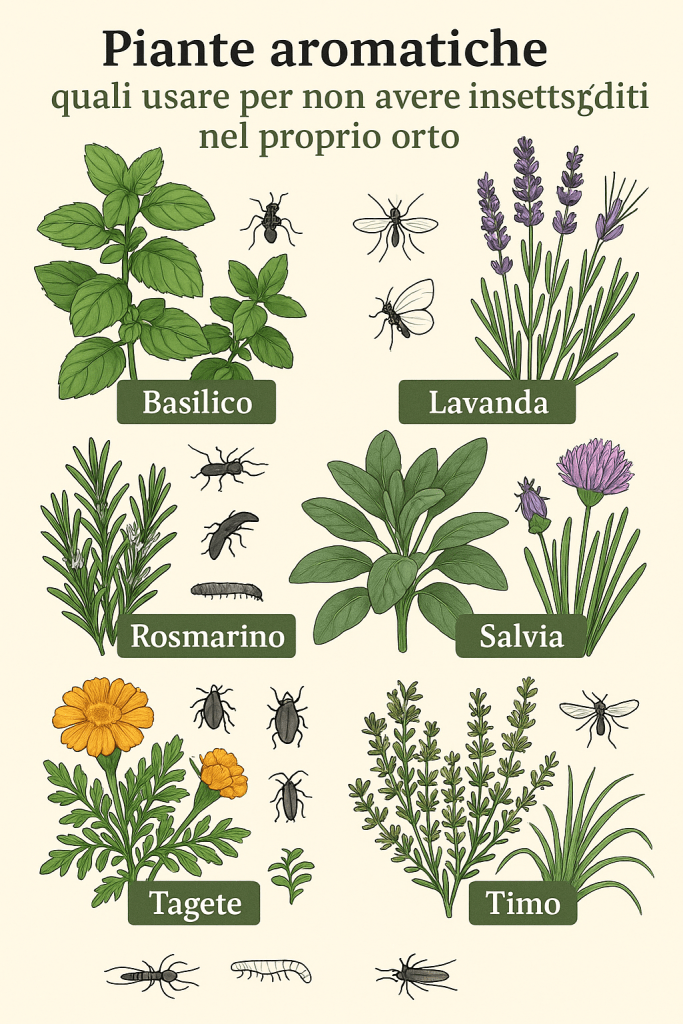
🌿 Piante aromatiche per un orto libero da insetti sgraditi
Aromatic Plants to Keep Unwanted Insects Away from Your Garden
Introduzione
Nel mondo del giardinaggio naturale, le piante aromatiche rappresentano un’arma efficace, ecologica e bella da vedere per tenere lontani insetti indesiderati. Oltre a insaporire i nostri piatti, molte di queste piante emettono oli essenziali e profumi capaci di respingere parassiti come afidi, zanzare, mosche e formiche. In questo articolo analizziamo in profondità sette piante aromatiche fondamentali: basilico, lavanda, rosmarino, salvia, tagete, timo e erba cipollina.
🌱 Basilico (Ocimum basilicum)
Basil (Ocimum basilicum)
ITALIANO
Il basilico non è solo un ingrediente base della cucina mediterranea, ma anche un alleato formidabile nell’orto. Il suo profumo pungente, prodotto dagli oli essenziali nelle foglie, è sgradito a molti insetti tra cui mosche, zanzare e afidi.
Il basilico cresce bene in vasi o direttamente in terra, richiede esposizione al sole e annaffiature regolari. Coltivarlo vicino a pomodori aiuta a tenerli al sicuro dagli attacchi dei moscerini bianchi e migliora anche la crescita delle piante stesse.
ENGLISH
Basil isn’t just a cornerstone of Mediterranean cuisine—it’s also a powerful natural insect repellent. Its intense fragrance, released by the essential oils in its leaves, keeps away pests like flies, mosquitoes, and aphids.
Basil thrives in pots or in the ground, needs plenty of sunlight and consistent watering. Planted next to tomatoes, it protects them from whiteflies and even enhances their growth.
💜 Lavanda (Lavandula spp.)
Lavender (Lavandula spp.)
ITALIANO
La lavanda è famosa per la sua bellezza e il suo profumo calmante, ma è anche uno degli antiparassitari naturali più efficaci. I suoi fiori e le sue foglie contengono linalolo, una sostanza che tiene lontane falene, mosche e zanzare.
Può essere piantata lungo i bordi dell’orto o tra le file per creare una barriera visiva e olfattiva contro i parassiti. La lavanda è ideale per chi vuole un orto ordinato e profumato tutto l’anno, dato che è anche una pianta perenne.
ENGLISH
Lavender is known for its beauty and calming fragrance, but it’s also one of the most effective natural insect repellents. Its flowers and leaves contain linalool, which repels moths, flies, and mosquitoes.
Plant lavender along garden borders or between rows to create a sensory and visual barrier. Being a perennial, lavender keeps your garden neat and fragrant year-round.
🌿 Rosmarino (Rosmarinus officinalis)
Rosemary (Rosmarinus officinalis)
ITALIANO
Il rosmarino è una pianta robusta, resistente alla siccità e adattabile a diversi climi. Il suo odore intenso scoraggia l’arrivo di cavolaie, moscerini, formiche e alcuni tipi di larve.
Si presta bene alla coltivazione in vaso, in aiuole o come siepe aromatica. Le sue proprietà repellenti aumentano se si sfregano le foglie, rilasciando un aroma ancora più forte. Ottimo da piantare vicino a cavoli e broccoli.
ENGLISH
Rosemary is a tough, drought-resistant herb that adapts well to various climates. Its strong scent deters cabbage moths, gnats, ants, and certain larvae.
It grows well in pots, flower beds, or as a low hedge. The repellent effect increases when its leaves are rubbed, releasing an even stronger aroma. Ideal to plant near cabbage and broccoli.
🌾 Salvia (Salvia officinalis)
Sage (Salvia officinalis)
ITALIANO
La salvia è una pianta versatile, dall’aroma penetrante e dal potere repellente contro cavolaie, coleotteri e lepidotteri. Le sue foglie grigio-verdi contengono composti aromatici che disturbano l’olfatto degli insetti dannosi.
Preferisce terreni ben drenati e posizioni soleggiate. È utile nelle consociazioni con ortaggi come cavoli e carote, che beneficiano della sua protezione.
ENGLISH
Sage is a versatile plant with a sharp aroma that repels cabbage moths, beetles, and caterpillars. Its gray-green leaves are full of aromatic compounds that disorient harmful insects.
It prefers well-drained soil and full sun. Perfect when grown near vegetables like cabbage and carrots, which benefit from its protective aura.
🌼 Tagete (Tagetes spp.)
Marigold (Tagetes spp.)
ITALIANO
Il tagete è noto per i suoi colori vivaci e per la capacità di tenere lontani afidi, nematodi, zanzare e scarabei. I composti chimici rilasciati dalle radici e dai fiori agiscono come pesticidi naturali.
Piantarli in bordure o intercalati tra gli ortaggi è una strategia intelligente per migliorare la salute dell’orto. Attira anche insetti utili come sirfidi e coccinelle, predatori naturali dei parassiti.
ENGLISH
Marigold is famous for its bright flowers and its ability to repel aphids, nematodes, mosquitoes, and beetles. The chemicals released by its roots and blooms act as natural pesticides.
Plant them as borders or interspersed among vegetables to boost garden health. They also attract beneficial insects like hoverflies and ladybugs, which are natural pest predators.
🌱 Timo (Thymus vulgaris)
Thyme (Thymus vulgaris)
ITALIANO
Il timo è un piccolo arbusto aromatico che rilascia oli essenziali molto potenti. Repelle afidi, cavolaie, vermi e perfino alcune specie di acari. È una pianta rustica e resistente, ottima anche per riempire gli spazi vuoti tra ortaggi.
Il suo profumo persistente crea una barriera naturale contro molti insetti volanti. Richiede poca acqua, cresce bene in zone assolate e può essere raccolto tutto l’anno.
ENGLISH
Thyme is a small, hardy shrub that emits powerful essential oils. It repels aphids, cabbage moths, worms, and even some mites. It’s ideal for filling gaps between vegetable rows.
Its lingering fragrance forms a natural barrier against many flying pests. It needs little water, thrives in sunny spots, and can be harvested year-round.
🌾 Erba cipollina (Allium schoenoprasum)
Chives (Allium schoenoprasum)
ITALIANO
L’erba cipollina, oltre a insaporire piatti e insalate, è una barriera contro insetti come afidi, tripidi e mosche. I composti solforati che rilascia quando viene tagliata o disturbata hanno un’azione repulsiva molto forte.
Può essere coltivata in vaso o in terra, e cresce bene accanto a carote, pomodori e peperoni. In primavera produce piccoli fiori viola molto apprezzati anche dalle api.
ENGLISH
Chives are not only a flavorful addition to dishes but also a strong repellent against aphids, thrips, and flies. When disturbed or cut, they release sulfur compounds that act as powerful insect deterrents.
They grow well in pots or in the ground and thrive next to carrots, tomatoes, and peppers. In spring, they bloom with lovely purple flowers that attract bees.
🐞 Benefici secondari
Secondary Benefits
ITALIANO
Queste piante non solo respingono insetti dannosi, ma migliorano anche la biodiversità del giardino. Attirano impollinatori, migliorano la salute del suolo, e alcune arricchiscono l’ecosistema con sostanze antifungine o antibatteriche naturali.
ENGLISH
These herbs don’t just repel pests—they enhance garden biodiversity. They attract pollinators, improve soil health, and some even enrich the ecosystem with natural antifungal or antibacterial properties.
🛠️ Come organizzare un orto aromatico funzionale
How to Design a Functional Aromatic Garden
ITALIANO
Per sfruttare al meglio queste piante, è utile disporle lungo i bordi delle aiuole o tra le file di ortaggi. Alternare le varietà crea una difesa multipla e migliora l’aspetto estetico dell’orto.
Una rotazione stagionale e il taglio regolare delle piante favoriscono la continua emissione di sostanze aromatiche. Non dimenticare di annaffiarle regolarmente e potarle per mantenerle attive.
ENGLISH
To make the most of these herbs, place them along garden edges or between vegetable rows. Mixing varieties provides layered protection and improves the garden’s visual appeal.
Seasonal rotation and regular trimming enhance their aromatic output. Don’t forget to water and prune them to keep them vigorous.
🌺 Conclusione
Conclusion
ITALIANO
Integrare piante aromatiche nel proprio orto è un gesto semplice ma potente. Aiuta a ridurre l’uso di pesticidi chimici, migliora la salute delle piante e rende il giardino un luogo più piacevole. Che tu sia un esperto giardiniere o un principiante, queste sette piante sono ottimi alleati naturali per un orto sano e produttivo.
ENGLISH
Incorporating aromatic herbs into your garden is a simple yet powerful move. It reduces the need for chemical pesticides, improves plant health, and turns your garden into a more enjoyable space. Whether you’re a seasoned gardener or a beginner, these seven herbs are your natural allies for a healthier, more productive vegetable patch.
 458socom.org
Rispondi