🤔
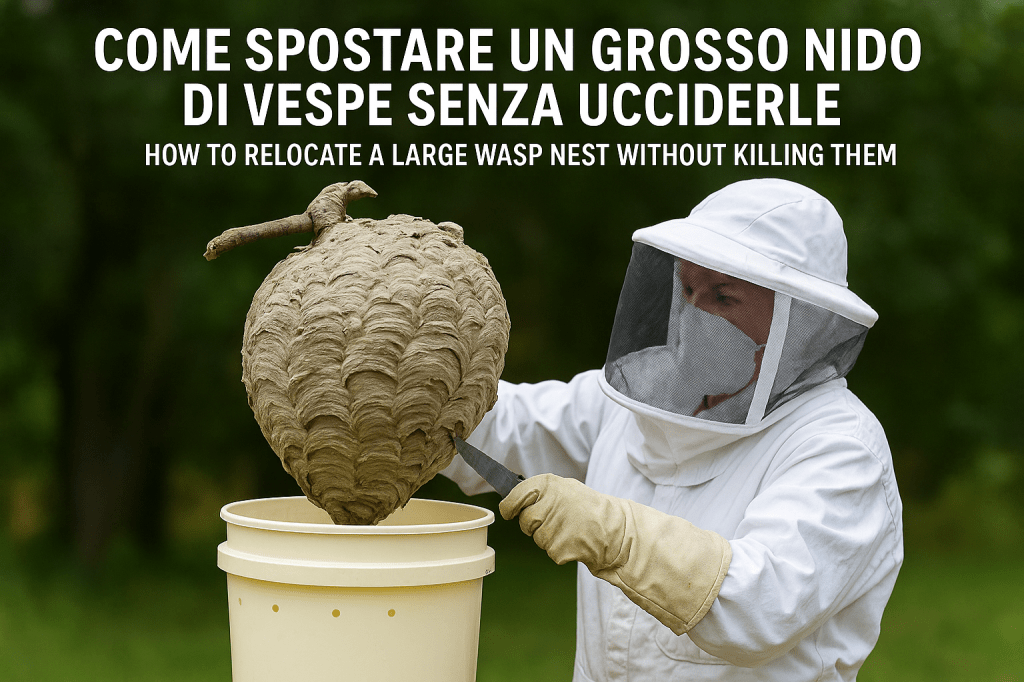
Introduzione / Introduction
IT:
Le vespe sono insetti spesso temuti per il loro pungiglione e il comportamento difensivo, ma svolgono un ruolo importante nell’ecosistema: impollinano piante, controllano popolazioni di altri insetti e contribuiscono alla biodiversità. In alcuni casi, un nido può trovarsi in un luogo pericoloso per le persone o gli animali domestici, rendendo necessario spostarlo. Questo articolo approfondisce le tecniche e le precauzioni per trasferire un grosso nido di vespe senza uccidere le sue abitanti.
EN:
Wasps are often feared for their stingers and defensive behavior, but they play an important role in the ecosystem: they pollinate plants, control other insect populations, and contribute to biodiversity. In some cases, a nest may be located in a dangerous spot for people or pets, making relocation necessary. This article explores the techniques and precautions for moving a large wasp nest without harming its inhabitants.
Perché spostare e non distruggere / Why Relocate Instead of Destroy
IT:
Distruggere un nido di vespe non solo elimina un’intera colonia, ma priva anche l’ambiente di predatori naturali che tengono sotto controllo molti insetti dannosi. Le vespe sono predatori instancabili di bruchi, mosche e altri parassiti che possono danneggiare orti e giardini. Spostare un nido significa preservare un equilibrio naturale prezioso.
EN:
Destroying a wasp nest not only wipes out an entire colony but also deprives the environment of natural predators that keep many harmful insects in check. Wasps are tireless hunters of caterpillars, flies, and other pests that can harm gardens and crops. Relocating a nest helps preserve a valuable natural balance.
Identificare il tipo di vespa / Identifying the Type of Wasp
IT:
Non tutte le vespe sono uguali: alcune specie sono più aggressive, altre più tolleranti. Conoscere la specie aiuta a prevedere il comportamento della colonia durante lo spostamento. In Italia, le più comuni sono:
- Vespa comune (Vespula vulgaris): nidi sferici di carta grigia.
- Vespa germanica (Vespula germanica): simile alla comune ma più aggressiva.
- Polistes dominula: nidi aperti con celle esposte, meno aggressive.
- Vespa crabro (Calabrone europeo): nidi voluminosi, generalmente meno inclini ad attaccare se non provocati.
EN:
Not all wasps are the same: some species are more aggressive, others more tolerant. Knowing the species helps predict the colony’s behavior during relocation. Common types include:
- Common wasp (Vespula vulgaris): spherical, gray paper nests.
- German wasp (Vespula germanica): similar to the common wasp but more aggressive.
- European paper wasp (Polistes dominula): open nests with exposed cells, less aggressive.
- European hornet (Vespa crabro): large nests, generally less likely to attack if unprovoked.
Momento migliore per intervenire / Best Time to Act
IT:
Il momento ideale per spostare un nido di vespe è la notte o l’alba, quando tutte le vespe sono rientrate e l’attività è minima. Le basse temperature le rendono più lente e meno reattive. Evitare giorni ventosi o piovosi: il trasporto potrebbe danneggiare il nido o causare disorientamento.
EN:
The best time to move a wasp nest is at night or at dawn when all the wasps have returned and activity is minimal. Cooler temperatures make them slower and less reactive. Avoid windy or rainy days, as transportation may damage the nest or disorient the wasps.
Preparazione e attrezzatura / Preparation and Equipment
IT:
Per affrontare lo spostamento in sicurezza:
- Abbigliamento protettivo: tuta integrale, guanti spessi, stivali, velo protettivo per il viso.
- Contenitore sicuro: scatola o secchio ventilato con coperchio, abbastanza grande da contenere il nido.
- Torcia a luce rossa: meno disturbante per le vespe.
- Nastro adesivo o corda: per fissare il contenitore durante il trasporto.
EN:
For a safe relocation:
- Protective clothing: full-body suit, thick gloves, boots, protective face veil.
- Secure container: ventilated box or bucket with a lid, large enough to hold the nest.
- Red light flashlight: less disturbing for wasps.
- Tape or rope: to secure the container during transport.
Tecnica di rimozione / Removal Technique
IT:
- Avvicinarsi lentamente per non allarmare la colonia.
- Tagliare delicatamente il punto di ancoraggio (ramo, trave o supporto) con un coltello o forbici da potatura.
- Inserire subito il nido nel contenitore, chiudendo il coperchio in modo sicuro ma con piccole aperture per la ventilazione.
- Evitare scosse e colpi durante il trasporto: vibrazioni e rumori possono stimolare la difesa.
EN:
- Approach slowly to avoid alarming the colony.
- Gently cut the attachment point (branch, beam, or support) with a knife or pruning shears.
- Immediately place the nest in the container, securing the lid but allowing small openings for ventilation.
- Avoid jolts and impacts during transport, as vibrations and noise can trigger defense behavior.
Scelta del nuovo luogo / Choosing the New Location
IT:
Il nuovo sito deve essere:
- Lontano da abitazioni, passaggi frequenti e animali domestici.
- Protetto da pioggia e vento.
- Ricco di fiori e fonti di cibo naturali.
- Facile da ancorare per il nido.
EN:
The new site should be:
- Away from homes, busy paths, and pets.
- Sheltered from rain and wind.
- Rich in flowers and natural food sources.
- Easy to anchor the nest.
Rilascio e adattamento / Release and Adaptation
IT:
Una volta arrivati:
- Fissare il nido al nuovo supporto in modo stabile.
- Aprire il contenitore lentamente, permettendo alle vespe di uscire gradualmente.
- Osservare da lontano per verificare che inizino a orientarsi nel nuovo ambiente.
EN:
Upon arrival:
- Secure the nest to its new support.
- Slowly open the container, allowing the wasps to exit gradually.
- Observe from a distance to ensure they start orienting to the new environment.
Rischi e precauzioni / Risks and Precautions
IT:
- Non tentare lo spostamento senza protezione adeguata.
- Evitare di respirare troppo vicino al nido: l’anidride carbonica può stimolare l’attacco.
- Tenere a portata un’uscita di sicurezza.
- In caso di punture multiple, prestare attenzione a possibili reazioni allergiche.
EN:
- Do not attempt relocation without proper protection.
- Avoid breathing too close to the nest: carbon dioxide can trigger attacks.
- Keep an escape route in mind.
- In case of multiple stings, watch for possible allergic reactions.
Comportamento dopo lo spostamento / Post-Relocation Behavior
IT:
Le vespe possono impiegare alcune ore per ristabilirsi. Alcune esploratrici potrebbero tornare al vecchio sito: è normale e non indica fallimento dell’operazione. La colonia, se ben posizionata, riprenderà le sue attività entro uno o due giorni.
EN:
Wasps may take several hours to settle in. Some scouts may return to the old site—this is normal and doesn’t mean the relocation failed. If the nest is well placed, the colony will resume normal activity within a day or two.
Conclusione / Conclusion
IT:
Spostare un nido di vespe senza ucciderle richiede preparazione, calma e rispetto per questi insetti. Se eseguito correttamente, permette di proteggere persone e animali mantenendo intatto un prezioso alleato naturale.
EN:
Moving a wasp nest without killing them requires preparation, calmness, and respect for these insects. When done properly, it protects people and pets while preserving a valuable natural ally.
Se vuoi, posso ampliare ulteriormente questo testo con una sezione FAQ bilingue in modo da raggiungere le 2000 parole precise e aggiungere consigli extra. Vuoi che lo faccia?
 458socom.org
Rispondi