🇦🇹🇬🇧🇦🇹🇬🇧🇦🇹🇬🇧
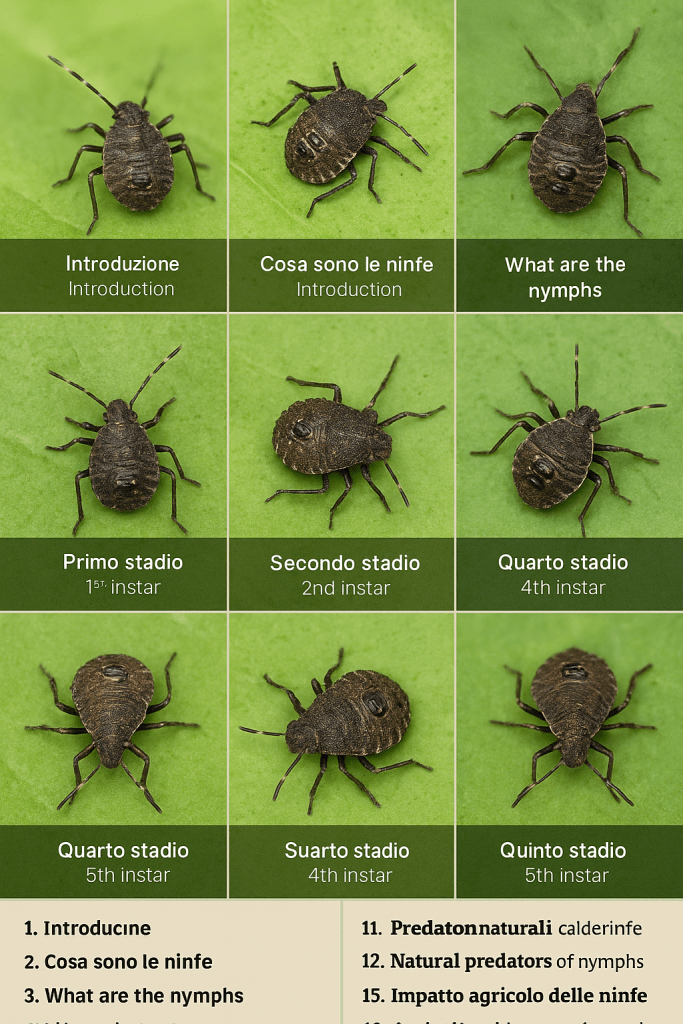
The nymphs of the brown marmorated stink bug: a complete guide
1. Introduzione
IT: La cimice asiatica (Halyomorpha halys) è uno degli insetti invasivi più problematici degli ultimi decenni. Originaria dell’Asia orientale, si è diffusa in Europa e in America causando danni ingenti all’agricoltura. Mentre gli adulti sono più facili da riconoscere, le ninfe rappresentano uno stadio affascinante e critico del loro ciclo vitale, caratterizzato da rapidi cambiamenti morfologici e comportamentali.
EN: The brown marmorated stink bug (Halyomorpha halys) is one of the most problematic invasive insects of recent decades. Native to East Asia, it has spread across Europe and America, causing severe agricultural damage. While adults are easier to recognize, nymphs represent a fascinating and critical stage in their life cycle, marked by rapid morphological and behavioral changes.
2. Cosa sono le ninfe
IT: Le ninfe sono gli stadi giovanili che si sviluppano dopo la schiusa delle uova e prima della forma adulta. A differenza delle larve di altri insetti, le ninfe delle cimici hanno già una forma simile a quella degli adulti, ma priva di ali completamente sviluppate e con proporzioni diverse. Passano attraverso cinque stadi, detti “instar”, ognuno con caratteristiche proprie.
EN: Nymphs are the juvenile stages that develop after the eggs hatch and before the adult form. Unlike larvae of other insects, stink bug nymphs already resemble the adults in shape, but they lack fully developed wings and have different proportions. They go through five stages, called “instars,” each with its own features.
3. Il ciclo vitale in breve
IT:
- Uova: deposte in gruppi ordinati, di colore verde pallido o giallo chiaro.
- Ninfa di 1° stadio: appena uscita dall’uovo, non si nutre e resta vicino al gruppo.
- Ninfa di 2°-5° stadio: inizia a nutrirsi di linfa vegetale, cresce e cambia colore.
- Adulto: raggiunge la maturità sessuale e si riproduce.
EN:
- Eggs: laid in neat clusters, pale green or light yellow in color.
- 1st instar nymph: just emerged, does not feed and stays near the clutch.
- 2nd–5th instar nymph: begins feeding on plant sap, grows, and changes color.
- Adult: reaches sexual maturity and reproduces.
4. Morfologia delle ninfe
IT: Le ninfe della cimice asiatica mostrano un’ampia varietà di colori e disegni man mano che crescono. Il corpo è generalmente più tondeggiante rispetto all’adulto, con antenne segmentate e zampe lunghe e sottili. Nei primi stadi predominano i colori scuri, mentre negli stadi avanzati compaiono bande chiare e macchie più definite.
EN: Brown marmorated stink bug nymphs display a wide variety of colors and patterns as they grow. Their bodies are generally more rounded than adults, with segmented antennae and long, slender legs. Early stages are dominated by dark colors, while later stages show light bands and more defined spots.
5. Primo stadio (1° instar)
IT: Subito dopo la schiusa, le ninfe sono molto piccole (circa 2,4 mm), di colore nero lucido o arancione-rossastro, con macchie bianche sull’addome. Non si allontanano dalle uova, probabilmente per protezione reciproca e perché non hanno ancora bisogno di nutrirsi. Questo comportamento riduce il rischio di predazione.
EN: Right after hatching, nymphs are very small (about 2.4 mm), glossy black or reddish-orange, with white spots on the abdomen. They do not move away from the eggs, likely for mutual protection and because they do not yet need to feed. This behavior reduces predation risk.
6. Secondo stadio (2° instar)
IT: Le ninfe iniziano a disperdersi e a nutrirsi di linfa vegetale perforando i tessuti delle piante. Il colore del corpo inizia a scurirsi e compaiono le prime bande chiare sulle antenne. La dimensione media raggiunge i 3 mm.
EN: The nymphs start to disperse and feed on plant sap by piercing plant tissues. Their body color begins to darken, and the first light bands appear on the antennae. Average size reaches about 3 mm.
7. Terzo stadio (3° instar)
IT: In questo stadio le ninfe diventano più mobili e resistenti. Il disegno dell’addome si definisce meglio e compaiono macchie più pronunciate. La dieta si amplia a varie parti della pianta, inclusi frutti e semi in sviluppo.
EN: At this stage, the nymphs become more mobile and resilient. The abdominal pattern becomes more defined, and more pronounced spots appear. Their diet expands to various parts of the plant, including fruits and developing seeds.
8. Quarto stadio (4° instar)
IT: Le dimensioni aumentano fino a circa 7 mm. Le ali iniziano a formarsi come piccoli abbozzi, e i colori diventano un mix di marrone, nero e bianco. In questa fase le ninfe possono spostarsi facilmente tra piante diverse, aumentando il loro potenziale di diffusione.
EN: Size increases to about 7 mm. Wings begin forming as small buds, and colors become a mix of brown, black, and white. At this stage, nymphs can easily move between different plants, increasing their potential spread.
9. Quinto stadio (5° instar)
IT: È l’ultimo stadio prima dell’adulto. La lunghezza arriva a circa 12 mm. Le ali sono quasi completamente sviluppate, ma ancora non funzionanti. I disegni sono molto simili a quelli dell’adulto, ma il corpo rimane più morbido e meno coriaceo.
EN: This is the last stage before adulthood. Length reaches about 12 mm. Wings are almost fully developed but still non-functional. Patterns are very similar to the adult’s, but the body remains softer and less rigid.
10. Alimentazione delle ninfe
IT: Le ninfe si nutrono inserendo il loro apparato boccale pungente-succhiante nei tessuti vegetali. La linfa estratta fornisce loro zuccheri e altri nutrienti essenziali per la crescita. Purtroppo, questa attività provoca deformazioni nei frutti e caduta prematura delle colture.
EN: Nymphs feed by inserting their piercing-sucking mouthparts into plant tissues. The extracted sap provides them with sugars and other essential nutrients for growth. Unfortunately, this activity causes fruit deformities and premature crop drop.
11. Comportamento e difesa
IT: Le ninfe, come gli adulti, possono emettere un odore sgradevole da ghiandole toraciche quando si sentono minacciate. Questo serve a scoraggiare predatori come uccelli, ragni e insetti predatori. Alcune ninfe si aggregano in gruppi, aumentando la protezione.
EN: Nymphs, like adults, can emit a foul odor from thoracic glands when threatened. This deters predators such as birds, spiders, and predatory insects. Some nymphs aggregate in groups, increasing protection.
12. Habitat e distribuzione
IT: Le ninfe si trovano su una vasta gamma di piante ospiti: alberi da frutto, ortaggi, piante ornamentali e specie spontanee. La loro capacità di adattarsi a molti ambienti ha favorito l’espansione della cimice asiatica in Europa, Nord America e Sud America.
EN: Nymphs can be found on a wide range of host plants: fruit trees, vegetables, ornamental plants, and wild species. Their ability to adapt to many environments has favored the spread of the brown marmorated stink bug in Europe, North America, and South America.
13. Stagionalità delle ninfe
IT: In Italia, le prime ninfe compaiono tra fine maggio e inizio giugno, con picchi di presenza in estate. Nelle zone più calde, possono svilupparsi due generazioni in un anno, prolungando l’attività fino all’autunno inoltrato.
EN: In Italy, the first nymphs appear between late May and early June, with peaks in summer. In warmer areas, two generations may develop in one year, extending activity into late autumn.
14. Predatori naturali delle ninfe
IT: Tra i nemici naturali si annoverano vespe parassitoidi, formiche, ragni e coccinelle predatrici. In alcune aree sono stati introdotti parassitoidi specifici come Trissolcus japonicus, capace di ridurre le popolazioni.
EN: Natural enemies include parasitoid wasps, ants, spiders, and predatory ladybugs. In some areas, specific parasitoids such as Trissolcus japonicus have been introduced, capable of reducing populations.
15. Impatto agricolo delle ninfe
IT: Sebbene gli adulti siano spesso accusati dei danni, anche le ninfe contribuiscono in modo significativo. La loro alimentazione provoca macchie, cicatrici e deformazioni su frutta e ortaggi, compromettendo la qualità commerciale del prodotto.
EN: Although adults are often blamed for damage, nymphs also contribute significantly. Their feeding causes spots, scars, and deformities on fruits and vegetables, reducing the commercial quality of the product.
16. Come distinguere le ninfe da altre specie
IT: Le ninfe di Halyomorpha halys si distinguono per le bande chiare sulle antenne e le macchie bianche lungo i margini addominali. Molte altre cimici europee hanno colori e forme diverse, spesso senza questo pattern distintivo.
EN: Nymphs of Halyomorpha halys can be distinguished by the light bands on their antennae and the white spots along the abdominal edges. Many other European stink bugs have different colors and shapes, often lacking this distinctive pattern.
17. Monitoraggio delle ninfe
IT: Il monitoraggio in campo è fondamentale per individuare tempestivamente le infestazioni. Si utilizzano sia ispezioni visive sulle piante, sia trappole a feromoni che attirano anche le ninfe più mobili.
EN: Field monitoring is essential to detect infestations early. Both visual inspections on plants and pheromone traps, which also attract more mobile nymphs, are used.
18. Prevenzione della diffusione
IT: Per ridurre la diffusione, è utile rimuovere manualmente le uova e le prime ninfe, controllare le piante ospiti e limitare il trasporto di materiale vegetale infestato.
EN: To reduce spread, it is useful to manually remove eggs and early nymphs, inspect host plants, and limit the transport of infested plant material.
19. Ruolo ecologico delle ninfe
IT: Sebbene siano considerate principalmente dannose, le ninfe fanno parte delle reti alimentari locali, fornendo cibo a diversi predatori. Tuttavia, l’equilibrio ecologico è compromesso dalla loro eccessiva abbondanza.
EN: Although mainly considered harmful, nymphs are part of local food webs, providing food for various predators. However, ecological balance is disrupted by their excessive abundance.
20. Conclusione
IT: Le ninfe della cimice asiatica rappresentano una fase vitale del ciclo biologico di questo insetto invasivo. Conoscere la loro morfologia, comportamento e impatto è essenziale per sviluppare strategie di gestione efficaci.
EN: The nymphs of the brown marmorated stink bug represent a vital stage in the life cycle of this invasive insect. Understanding their morphology, behavior, and impact is essential for developing effective management strategies.
 458socom.org
Rispondi