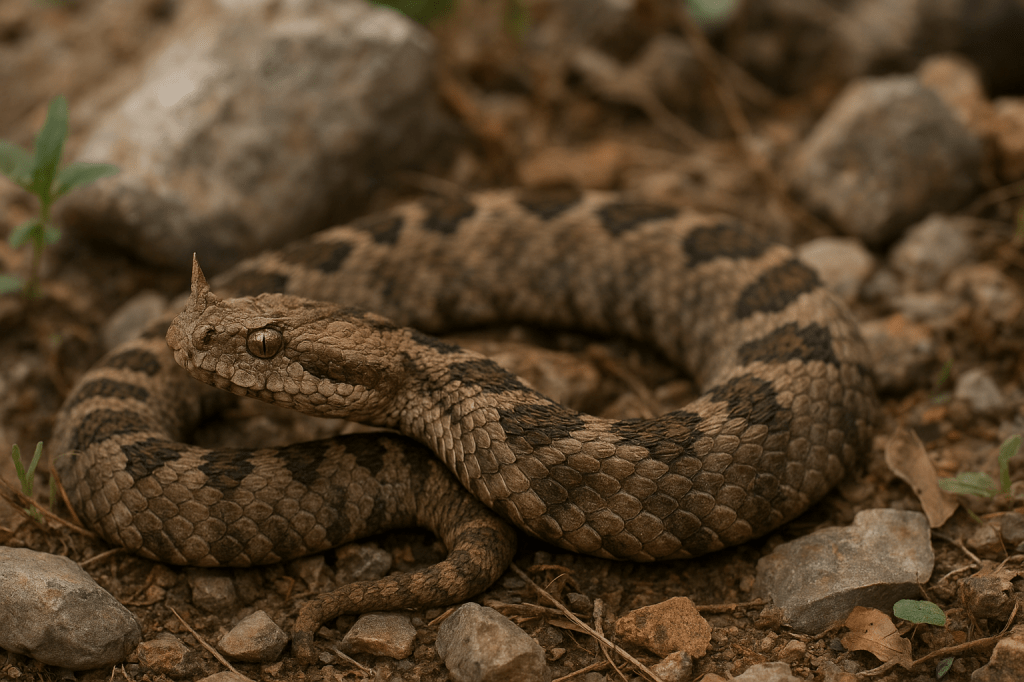
ammodytes: the mysterious horned viper
Introduzione / Introduction
La Vipera ammodytes, conosciuta come vipera dal corno, è uno dei serpenti più affascinanti e temuti d’Europa. Caratterizzata da un piccolo corno carnoso posto sulla punta del muso, questa specie si distingue facilmente dalle altre vipere del Vecchio Continente. La sua fama di serpente pericoloso è diffusa, ma la realtà è più complessa e sorprendente.
The Vipera ammodytes, commonly called the horned viper, is one of the most fascinating and feared snakes in Europe. Distinguished by a small fleshy horn at the tip of its snout, this species is easy to recognize among European vipers. Its reputation as a dangerous snake is widespread, but the reality is far more nuanced and surprising.
Aspetto e caratteristiche morfologiche / Appearance and morphological traits
La vipera dal corno può raggiungere mediamente i 60–80 cm di lunghezza, con alcuni esemplari che superano i 90 cm. Il corpo è robusto, la testa triangolare e ben distinta dal collo. Il colore varia notevolmente: può presentare tonalità grigie, brune, rossastre o giallastre, spesso ornate da una caratteristica striscia a zig-zag lungo il dorso. Il corno, formato da squame sovrapposte, non ha alcuna funzione velenosa né ossea: è un tratto ornamentale unico, che probabilmente aiuta a spezzare la sagoma e a mimetizzarsi tra rocce e fogliame.
The horned viper usually measures 60–80 cm in length, with some individuals exceeding 90 cm. Its body is stocky, the head triangular and distinct from the neck. Coloration varies widely: grey, brown, reddish, or yellowish tones, often decorated with a zig-zag dorsal stripe. The horn, composed of overlapping scales, is neither venomous nor bony: it is a unique ornamental feature, probably helping to break up the outline and enhance camouflage among rocks and leaves.
Distribuzione geografica / Geographic distribution
La Vipera ammodytes è diffusa in un’ampia area che va dall’Italia nord-orientale fino ai Balcani, comprendendo Slovenia, Croazia, Serbia, Bulgaria, Grecia e persino parti della Turchia. È considerata una delle vipere europee con il maggior areale e si adatta a diversi habitat: dalle pendici montane sassose alle zone collinari aride, fino ai margini dei boschi.
The Vipera ammodytes ranges widely, from north-eastern Italy across the Balkans, including Slovenia, Croatia, Serbia, Bulgaria, Greece, and even parts of Turkey. It is one of the European vipers with the broadest distribution and adapts to a variety of habitats: rocky mountain slopes, dry hillsides, and woodland edges.
Habitat e stile di vita / Habitat and lifestyle
Predilige zone soleggiate e aride, spesso con rocce sparse e cespugli. È un rettile principalmente diurno nelle stagioni fresche, ma tende a diventare più crepuscolare o notturno durante le estati torride. Trascorre molto tempo nascosta tra sassi, radici o cumuli di foglie, pronta a scattare solo quando si sente minacciata o quando una preda passa nelle vicinanze.
It prefers sunny, dry areas with scattered rocks and shrubs. It is mainly diurnal in cooler seasons but shifts to crepuscular or nocturnal activity during hot summers. Much of its time is spent hidden among stones, roots, or piles of leaves, ready to strike only when threatened or when prey comes within reach.
Alimentazione e strategie di caccia / Diet and hunting strategies
La vipera dal corno è un predatore paziente. Si nutre soprattutto di piccoli mammiferi come roditori, ma anche di lucertole, uccelli e occasionalmente insetti di grandi dimensioni. Utilizza la tecnica dell’agguato: rimane immobile, perfettamente mimetizzata, e colpisce fulminea inoculando il veleno. Poi lascia che la preda, indebolita, cada a breve distanza, per poi rintracciarla grazie all’olfatto e ai sensori termici presenti sul muso.
The horned viper is a patient predator. Its diet consists mainly of small mammals such as rodents, but also lizards, birds, and occasionally large insects. It hunts by ambush: remaining motionless, perfectly camouflaged, and striking swiftly to inject venom. Then it releases the prey, allowing it to weaken and die a short distance away, later tracking it down using scent and thermal sensors located on its snout.
Riproduzione e ciclo vitale / Reproduction and life cycle
La Vipera ammodytes è ovovivipara: le uova si schiudono all’interno del corpo materno, e i piccoli nascono già formati. I parti avvengono tra fine estate e inizio autunno, con cucciolate di 5–15 piccoli lunghi circa 20 cm. La maturità sessuale viene raggiunta tra i 3 e i 5 anni, e la longevità in natura può superare i 15 anni.
Vipera ammodytes is ovoviviparous: eggs hatch inside the mother’s body, and young are born fully formed. Birth occurs between late summer and early autumn, with litters of 5–15 offspring about 20 cm long. Sexual maturity is reached between 3 and 5 years, and lifespan in the wild can exceed 15 years.
Il veleno e i suoi effetti / Venom and its effects
Il veleno della vipera dal corno è tra i più potenti delle vipere europee. È una miscela complessa di enzimi e tossine che agiscono principalmente sul sistema circolatorio, causando dolore intenso, gonfiore, emorragie locali e, nei casi più gravi, complicazioni sistemiche. Nonostante la sua fama letale, i decessi umani sono rari e generalmente collegati a mancanza di cure tempestive o a condizioni di salute preesistenti. L’uso di sieri antivipera moderni ha drasticamente ridotto la mortalità.
The venom of the horned viper is among the most potent of European vipers. It is a complex mixture of enzymes and toxins that primarily affect the circulatory system, causing intense pain, swelling, local hemorrhage, and in severe cases systemic complications. Despite its deadly reputation, human fatalities are rare and usually linked to lack of prompt medical care or pre-existing health issues. Modern antivenoms have drastically reduced mortality rates.
Relazione con l’uomo / Relationship with humans
Il rapporto tra uomo e vipera dal corno è ambivalente. Da un lato, essa suscita timore e talvolta persecuzioni indiscriminate; dall’altro, affascina erpetologi, naturalisti e appassionati di fauna selvatica. In molte zone rurali è stata sterminata a causa della paura, ma il suo ruolo ecologico come regolatrice delle popolazioni di roditori è preziosissimo.
The relationship between humans and the horned viper is ambivalent. On the one hand, it inspires fear and sometimes indiscriminate persecution; on the other, it fascinates herpetologists, naturalists, and wildlife enthusiasts. In many rural areas it has been eradicated out of fear, yet its ecological role as a regulator of rodent populations is invaluable.
Comportamento difensivo e miti popolari / Defensive behavior and popular myths
Contrariamente a ciò che si pensa, la Vipera ammodytes non è aggressiva. Morde solo se calpestata, molestata o catturata. Di solito preferisce fuggire o mimetizzarsi. Tuttavia, la sua fama è circondata da leggende: si dice che salti addosso agli uomini, che insegua le vittime o che il suo corno sia velenoso. Tutte false credenze, frutto di secoli di paura e superstizione.
Contrary to popular belief, Vipera ammodytes is not aggressive. It bites only if stepped on, harassed, or captured. Usually, it prefers to flee or remain hidden. Yet myths abound: people claim it jumps at humans, pursues victims, or that its horn is venomous. All these are false beliefs, born from centuries of fear and superstition.
Importanza ecologica / Ecological importance
Come predatore apicale nei piccoli ecosistemi locali, la vipera dal corno contribuisce a mantenere l’equilibrio naturale. Controlla le popolazioni di roditori che, senza predatori, potrebbero devastare colture e diffondere malattie. La sua presenza è un indicatore di ambienti ancora sani e non troppo disturbati.
As a top predator in small ecosystems, the horned viper helps maintain natural balance. It regulates rodent populations that, without predators, could devastate crops and spread disease. Its presence indicates relatively healthy, undisturbed environments.
Conservazione e minacce / Conservation and threats
La specie non è attualmente in pericolo di estinzione, ma subisce pressioni crescenti: perdita di habitat, urbanizzazione, incendi boschivi, e persecuzione diretta da parte dell’uomo. In alcuni Paesi è protetta dalla legge. Campagne di sensibilizzazione cercano di ridurre la paura e promuovere il rispetto verso questo rettile, fondamentale per la biodiversità.
The species is not currently endangered but faces increasing pressure: habitat loss, urbanization, wildfires, and direct persecution by humans. In some countries, it is legally protected. Awareness campaigns aim to reduce fear and promote respect for this reptile, essential for biodiversity.
Vipera ammodytes e cultura / Vipera ammodytes and culture
In molti villaggi balcanici, la vipera dal corno è stata oggetto di racconti e superstizioni. Il suo corno le ha conferito un’aura quasi demoniaca, trasformandola in simbolo di paura e malaugurio. Oggi, tuttavia, sta diventando anche un simbolo di resilienza naturale e di fascino scientifico.
In many Balkan villages, the horned viper has been the subject of tales and superstitions. Its horn gave it an almost demonic aura, turning it into a symbol of fear and bad omen. Today, however, it is increasingly seen as a symbol of natural resilience and scientific wonder.
Conclusione / Conclusion
La Vipera ammodytes è un animale straordinario: temuto, rispettato, spesso frainteso. Il suo corno, che un tempo alimentava paure e leggende, oggi rappresenta la bellezza enigmatica della natura. Comprenderla e proteggerla significa custodire un tassello prezioso della biodiversità europea.
The Vipera ammodytes is an extraordinary animal: feared, respected, often misunderstood. Its horn, once the source of fear and legend, now stands for the enigmatic beauty of nature. Understanding and protecting it means safeguarding a precious piece of Europe’s biodiversity.
 458socom.org
Rispondi