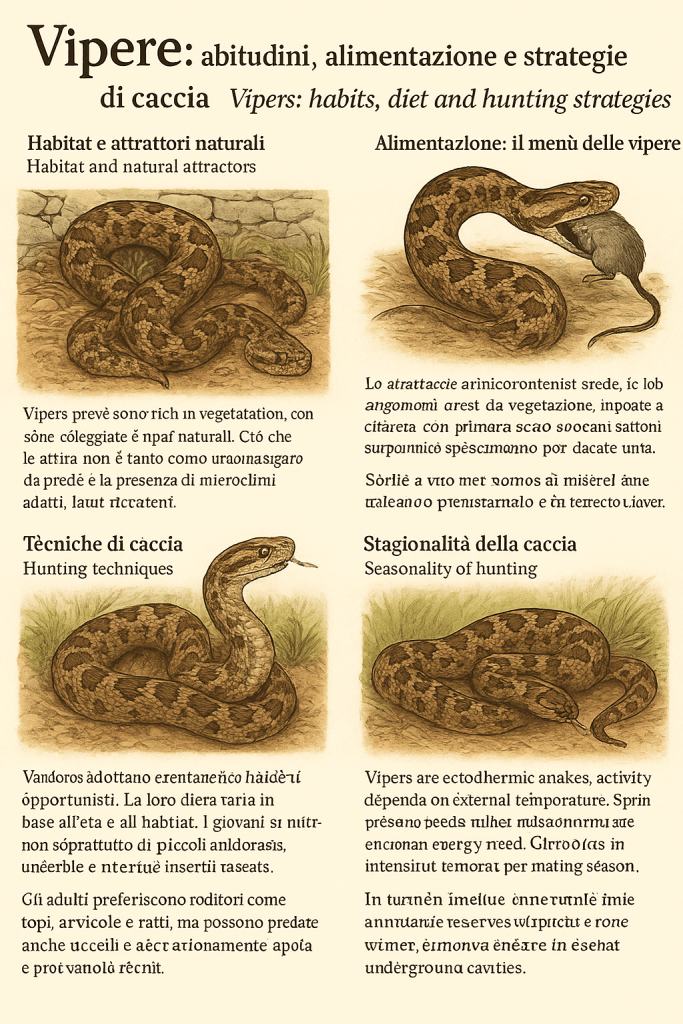
Vipers: habits, diet and hunting strategies
Introduzione
Introduction
Le vipere sono tra i serpenti più affascinanti e temuti del continente europeo. In Italia, il loro ruolo ecologico è di primaria importanza: regolano le popolazioni di piccoli mammiferi e contribuiscono all’equilibrio naturale. Tuttavia, attorno a loro circolano molte leggende e paure, spesso esagerate. Comprendere cosa le attira, cosa mangiano e come cacciano permette di ridurre i rischi di incontri indesiderati e di apprezzarne il valore biologico.
Vipers are among the most fascinating and feared snakes in Europe. In Italy, their ecological role is crucial: they regulate populations of small mammals and contribute to natural balance. However, many legends and fears surround them, often exaggerated. Understanding what attracts them, what they eat, and how they hunt helps reduce the risks of unwanted encounters and appreciate their biological importance.
Habitat e attrattori naturali
Habitat and natural attractors
Le vipere prediligono ambienti ricchi di vegetazione, con zone soleggiate e ripari naturali. Ciò che le attira non è tanto l’uomo, quanto la disponibilità di prede e la presenza di microclimi adatti. Pietraie, muretti a secco, prati montani e radure boschive offrono rifugi ideali. In prossimità di abitazioni rurali, possono trovare roditori che cercano grano o resti di cibo, e quindi seguirli.
Vipers prefer environments rich in vegetation, with sunny areas and natural shelters. What attracts them is not humans, but the availability of prey and suitable microclimates. Rocky areas, dry stone walls, mountain meadows, and forest clearings provide ideal shelters. Near rural houses, they may follow rodents looking for grain or food scraps.
Alimentazione: il menù delle vipere
Diet: the viper’s menu
Le vipere sono carnivore e predatori opportunisti. La loro dieta varia in base all’età e all’habitat. I giovani si nutrono soprattutto di piccoli anfibi, lucertole e insetti di maggiori dimensioni. Gli adulti preferiscono roditori come topi, arvicole e ratti, ma possono predare anche uccelli e occasionalmente altri rettili. L’alimentazione varia con la stagione: in primavera ed estate abbondano gli anfibi e le lucertole, mentre in autunno i piccoli mammiferi sono più numerosi.
Vipers are carnivorous and opportunistic predators. Their diet varies with age and habitat. Young vipers mainly feed on small amphibians, lizards, and large insects. Adults prefer rodents such as mice, voles, and rats, but they may also prey on birds and occasionally other reptiles. Their diet changes with the seasons: in spring and summer amphibians and lizards are abundant, while in autumn small mammals are more numerous.
Tecniche di caccia
Hunting techniques
Le vipere adottano la strategia dell’agguato. Restano immobili, mimetizzandosi tra l’erba o le rocce, aspettando che una preda si avvicini. Un rapido scatto e il morso velenoso paralizzano l’animale in pochi istanti. Dopo l’attacco, la vipera spesso lascia fuggire la preda, seguendone poi le tracce odorose fino a ritrovarla priva di vita. Questo metodo riduce il rischio di ferite da animali che tentano di difendersi.
Vipers use the ambush strategy. They remain motionless, camouflaging themselves among grass or rocks, waiting for prey to approach. A rapid strike and venomous bite paralyze the animal within seconds. After the attack, the viper often lets the prey flee, then follows its scent trail until it finds it lifeless. This method reduces the risk of injuries from prey defending itself.
Distanza dalla tana
Distance from the den
Contrariamente a quanto si crede, le vipere non si allontanano troppo dalla loro tana o rifugio. Normalmente si spostano entro poche decine di metri, soprattutto se l’area è ricca di prede e nascondigli. Tuttavia, in periodi di scarsità di cibo o durante la stagione degli amori, possono percorrere distanze maggiori, fino a centinaia di metri. Le femmine gravide tendono a rimanere più vicine a luoghi sicuri, mentre i maschi in primavera esplorano di più il territorio.
Contrary to popular belief, vipers do not stray too far from their den or shelter. Normally they move within a few dozen meters, especially if the area is rich in prey and hiding places. However, during food scarcity or mating season, they may travel greater distances, up to hundreds of meters. Pregnant females tend to stay closer to safe places, while males in spring explore more widely.
Stagionalità della caccia
Seasonality of hunting
Le vipere sono serpenti ectotermi: la loro attività dipende dalla temperatura esterna. In primavera iniziano a cacciare dopo il letargo invernale, con una forte necessità energetica. In estate cacciano soprattutto al mattino presto o nel tardo pomeriggio, evitando le ore troppo calde. In autunno intensificano le battute di caccia per accumulare riserve in vista del nuovo inverno. In inverno restano inattive, rifugiandosi in cavità sotterranee.
Vipers are ectothermic snakes: their activity depends on external temperature. In spring they start hunting after winter hibernation, with a strong energy need. In summer they hunt mainly in the early morning or late afternoon, avoiding the hottest hours. In autumn they intensify hunting to accumulate reserves for the next winter. In winter they remain inactive, sheltering in underground cavities.
Ruolo ecologico
Ecological role
Il ruolo delle vipere è fondamentale per gli ecosistemi. Limitano la crescita delle popolazioni di roditori, prevenendo danni ai raccolti e la diffusione di malattie. Sono a loro volta predate da rapaci come poiane e nibbi, contribuendo così alle catene alimentari naturali. Eliminare le vipere dall’ambiente significherebbe rompere un delicato equilibrio ecologico.
The role of vipers is essential for ecosystems. They limit the growth of rodent populations, preventing crop damage and the spread of diseases. They are themselves preyed upon by raptors such as buzzards and kites, thus contributing to natural food chains. Eliminating vipers from the environment would mean breaking a delicate ecological balance.
Relazione con l’uomo
Relationship with humans
Molti temono le vipere per il loro veleno. Tuttavia, gli attacchi sono rari e quasi sempre conseguenza di incontri accidentali, come un piede posato sopra di esse. Le vipere non cercano il contatto con l’uomo: si difendono solo se minacciate. Conoscere i loro comportamenti riduce il rischio di incidenti: indossare scarpe robuste in zone montane e osservare con attenzione il terreno sono accorgimenti semplici ma efficaci.
Many people fear vipers because of their venom. However, attacks are rare and almost always the result of accidental encounters, such as stepping on them. Vipers do not seek contact with humans: they only defend themselves if threatened. Knowing their behavior reduces the risk of accidents: wearing sturdy shoes in mountain areas and carefully observing the ground are simple yet effective precautions.
Falsi miti da sfatare
Myths to debunk
- Le vipere inseguono l’uomo? No, si difendono soltanto.
- Saltano addosso alle persone? No, al massimo compiono un rapido scatto per mordere.
- Il loro veleno è sempre letale? No, può essere pericoloso ma raramente mortale se si interviene rapidamente.
- Vivono solo in alta montagna? No, possono abitare colline, pianure e zone rurali.
- Do vipers chase humans? No, they only defend themselves.
- Do they jump onto people? No, at most they make a quick strike to bite.
- Is their venom always deadly? No, it can be dangerous but rarely fatal if treated quickly.
- Do they live only in high mountains? No, they can inhabit hills, plains, and rural areas.
Conclusioni
Conclusions
Le vipere sono predatori straordinari, guidati da un mix di istinto e adattamenti evolutivi. Ciò che le attira non è l’uomo, ma le prede e gli habitat favorevoli. Si nutrono di una vasta gamma di animali, cacciano con pazienza e precisione, e difficilmente si spostano troppo lontano dai loro rifugi. Rispettarle significa riconoscere il loro ruolo nel mantenere l’equilibrio della natura.
Vipers are extraordinary predators, guided by a mix of instinct and evolutionary adaptations. What attracts them is not humans, but prey and suitable habitats. They feed on a wide range of animals, hunt with patience and precision, and rarely move too far from their shelters. Respecting them means recognizing their role in maintaining nature’s balance.
 458socom.org
Rispondi