🇦🇹🇬🇧🇦🇹🇬🇧🇦🇹🇬🇧🇦🇹
1. Introduzione generale
Italiano
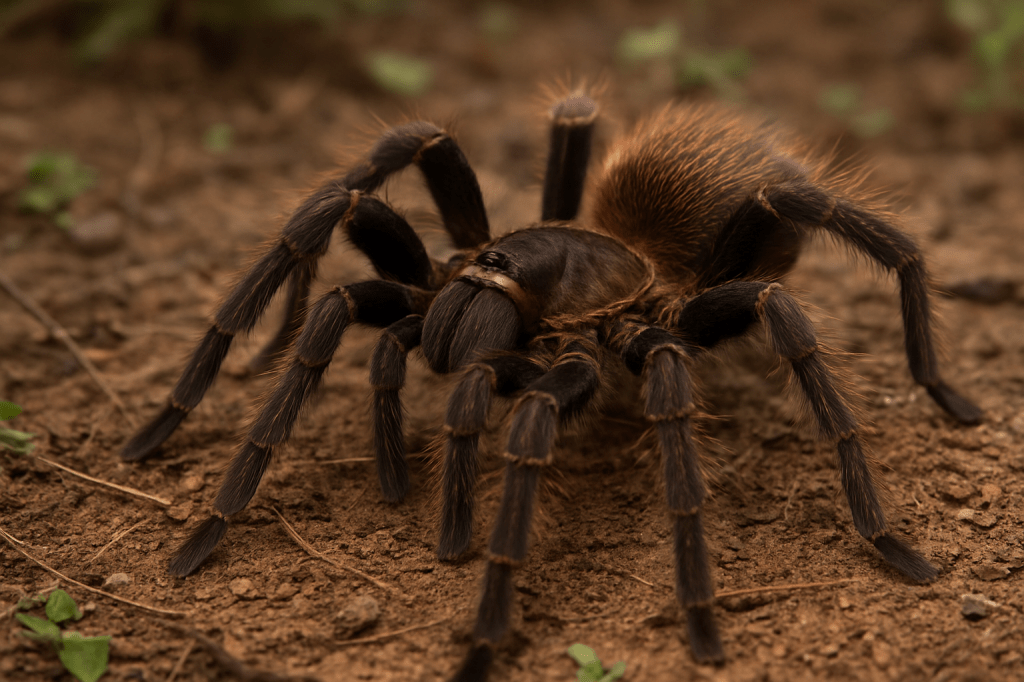
La tarantola africana è un animale che ha da sempre alimentato miti, leggende e timori. A differenza di ciò che il nome può suggerire, non appartiene al genere Lycosa (i veri ragni-lupo storicamente chiamati “tarantole” in Italia), bensì alla famiglia delle Theraphosidae, che comprende i ragni comunemente noti come tarantole nel linguaggio moderno. In Africa, queste specie si sono evolute in contesti ambientali estremamente variabili, sviluppando adattamenti sorprendenti. Alcune vivono nel caldo torrido delle savane, altre nei boschi umidi, altre ancora in ambienti semidesertici.
La loro importanza non è limitata alla biologia: la tarantola africana ha un ruolo nelle culture locali, nella medicina tradizionale e persino nel commercio terraristico moderno. Questo manuale intende fornire una panoramica completa e dettagliata, affrontando ogni aspetto della vita, della morfologia, del comportamento e della relazione di queste creature con l’uomo.
English
The African tarantula is an animal that has always fueled myths, legends, and fears. Unlike what its name might suggest, it does not belong to the genus Lycosa (the true wolf spiders historically called “tarantulas” in Italy), but to the Theraphosidae family, which includes the spiders commonly known as tarantulas in modern language. In Africa, these species have evolved in highly diverse environmental contexts, developing remarkable adaptations. Some live in the scorching heat of savannas, others in humid forests, and still others in semi-desert environments.
Their significance goes beyond biology: the African tarantula plays a role in local cultures, traditional medicine, and even the modern pet trade. This manual aims to provide a complete and detailed overview, covering every aspect of their life, morphology, behavior, and relationship with humans.
2. Classificazione e tassonomia
Italiano
Le tarantole africane appartengono all’ordine Araneae, infraordine Mygalomorphae. La famiglia di riferimento è quella delle Theraphosidae, che comprende oltre 1.000 specie distribuite in tutto il mondo. In Africa, i generi più rappresentativi includono:
- Ceratogyrus – note come “tarantole cornute” per la caratteristica protuberanza sul cefalotorace.
- Hysterocrates – grandi e robuste, spesso di colore scuro, molto diffuse in Camerun e Nigeria.
- Pterinochilus – tra cui la famosa Pterinochilus murinus, conosciuta come OBT (Orange Baboon Tarantula), celebre per il temperamento aggressivo.
- Stromatopelma – specie arboricole dell’Africa occidentale, veloci e difficili da gestire in cattività.
Questa varietà dimostra l’ampia diversità evolutiva raggiunta dal gruppo sul continente africano.
English
African tarantulas belong to the order Araneae, infraorder Mygalomorphae. Their family is the Theraphosidae, which includes over 1,000 species worldwide. In Africa, the most representative genera include:
- Ceratogyrus – known as “horned tarantulas” for the characteristic protuberance on the cephalothorax.
- Hysterocrates – large and robust, often dark-colored, widespread in Cameroon and Nigeria.
- Pterinochilus – including the famous Pterinochilus murinus, also called OBT (Orange Baboon Tarantula), renowned for its aggressive temperament.
- Stromatopelma – arboreal species from West Africa, fast-moving and difficult to manage in captivity.
This variety highlights the broad evolutionary diversity achieved by the group across the African continent.
3. Habitat naturale e distribuzione geografica
Italiano
Le tarantole africane sono distribuite in gran parte del continente subsahariano. Le loro tane si possono trovare:
- nelle sabbiose savane del Kenya;
- nei boschi pluviali del Camerun e del Congo;
- nelle steppe aride della Namibia;
- nei terreni coltivati del Sudafrica, dove a volte interagiscono con l’attività agricola umana.
La caratteristica comune è la capacità di scavare o occupare rifugi preesistenti. Le tane mantengono una temperatura e un’umidità più costanti rispetto all’ambiente esterno, essenziali per la sopravvivenza. Alcune specie arboricole preferiscono invece cavità nei tronchi e nelle cortecce.
English
African tarantulas are distributed across much of Sub-Saharan Africa. Their burrows can be found:
- in the sandy savannas of Kenya;
- in the rainforests of Cameroon and the Congo;
- in the arid steppes of Namibia;
- in the cultivated lands of South Africa, where they sometimes interact with human agricultural activity.
The common trait is their ability to dig or occupy pre-existing shelters. Burrows maintain more stable temperature and humidity levels than the external environment, essential for survival. Some arboreal species, however, prefer cavities in tree trunks and bark.
4. Morfologia e caratteristiche fisiche
Italiano
Le tarantole africane presentano un corpo massiccio e zampette robuste. Le dimensioni variano molto: specie medio-piccole come Ceratogyrus darlingi raggiungono i 12 cm di apertura zampe, mentre altre come Hysterocrates gigas possono superare i 20 cm. Il colore è un fattore distintivo:
- marrone scuro e nero per la mimetizzazione nel suolo;
- arancione brillante nella Pterinochilus murinus, usato come segnale di avvertimento;
- sfumature dorate o grigie in alcune Stromatopelma.
Il corpo è ricoperto da setae sensoriali che rilevano vibrazioni e correnti d’aria, rendendo la tarantola estremamente sensibile agli stimoli ambientali.
English
African tarantulas display a massive body and sturdy legs. Sizes vary greatly: medium-small species such as Ceratogyrus darlingi reach 12 cm leg spans, while others like Hysterocrates gigas can exceed 20 cm. Coloration is a distinctive factor:
- dark brown and black for soil camouflage;
- bright orange in Pterinochilus murinus, serving as a warning signal;
- golden or grayish hues in some Stromatopelma.
Their bodies are covered with sensory setae that detect vibrations and air currents, making the tarantula extremely responsive to environmental stimuli.
5. Comportamento e stile di vita
Italiano
Questi ragni sono per lo più solitari e territoriali. Passano gran parte del tempo nella tana, uscendo solo per cacciare o accoppiarsi. Alcune specie scavano cunicoli profondi fino a un metro, rivestiti di seta per consolidare le pareti. Le specie arboricole tessono rifugi tubolari tra rami e foglie.
Il comportamento difensivo varia:
- specie più tranquille si ritirano immediatamente;
- altre, come la Pterinochilus murinus, sono note per assumere una postura aggressiva, sollevando le zampe anteriori e mostrando le zanne.
English
These spiders are mostly solitary and territorial. They spend most of their time in burrows, emerging only to hunt or mate. Some species dig tunnels up to one meter deep, lined with silk to reinforce the walls. Arboreal species weave tubular shelters among branches and leaves.
Defensive behavior varies:
- more docile species retreat immediately;
- others, such as Pterinochilus murinus, are known to adopt an aggressive stance, raising their front legs and exposing their fangs.
6. Dieta e strategie di caccia
Italiano
La tarantola africana è un predatore opportunista. La dieta include grilli, scarafaggi, cavallette e altri artropodi. Le specie più grandi cacciano anche piccoli anfibi, rettili e roditori. Non usano ragnatele estese, ma la seta come “sensore”: fili sottili si estendono dalla tana e registrano vibrazioni. Al passaggio di una preda, la tarantola scatta fulminea, immobilizzandola con il veleno.
La digestione è esterna: iniettano enzimi che liquefano i tessuti, trasformando la preda in un fluido facilmente assorbibile.
English
The African tarantula is an opportunistic predator. Its diet includes crickets, cockroaches, grasshoppers, and other arthropods. Larger species also hunt small amphibians, reptiles, and rodents. They do not use large webs but silk as a “sensor”: fine threads extend from the burrow, registering vibrations. When prey passes by, the tarantula lunges swiftly, immobilizing it with venom.
Digestion is external: they inject enzymes that liquefy tissues, turning the prey into a fluid that can be easily absorbed.
7. Riproduzione e ciclo vitale
Italiano
Il corteggiamento è rischioso per il maschio: deve avvicinarsi con vibrazioni precise per non essere scambiato per una preda. Dopo l’accoppiamento, la femmina depone un ovisacco contenente da 50 a oltre 200 uova. La madre lo custodisce con attenzione, ruotandolo regolarmente per evitare muffe.
La schiusa avviene dopo alcune settimane. I piccoli restano con la madre finché non effettuano le prime mute, poi si disperdono. La longevità è notevole: le femmine vivono anche 20 anni, i maschi molto meno, raramente oltre i 5.
English
Courtship is risky for the male: he must approach with precise vibrations to avoid being mistaken for prey. After mating, the female lays an egg sac containing 50 to over 200 eggs. She guards it carefully, regularly rotating it to prevent mold.
Hatching occurs after several weeks. The spiderlings stay with the mother until their first molts, then disperse. Longevity is remarkable: females can live up to 20 years, while males much less, rarely beyond 5.
8. Veleno e difese naturali
Italiano
Il veleno delle tarantole africane non è letale per l’uomo, ma può provocare dolore intenso, gonfiore e sintomi sistemici in alcuni casi. Più che pericoloso, è funzionale alla predazione. Alcune specie possiedono peli urticanti che possono causare irritazioni cutanee o oculari.
English
The venom of African tarantulas is not lethal to humans, but it can cause intense pain, swelling, and systemic symptoms in some cases. More than dangerous, it is functional for predation. Some species possess urticating hairs that may cause skin or eye irritation.
9. Rapporto con l’uomo
Italiano
Le tarantole africane sono spesso temute e uccise ingiustamente. In alcune culture, però, vengono utilizzate come alimento o nella medicina tradizionale. Nel mondo moderno sono apprezzate da allevatori e collezionisti, anche se la loro aggressività le rende adatte solo a esperti.
English
African tarantulas are often feared and unjustly killed. In some cultures, however, they are used as food or in traditional medicine. In the modern world, they are appreciated by breeders and collectors, although their aggressiveness makes them suitable only for experts.
10. Ruolo ecologico
Italiano
Sono predatori regolatori degli ecosistemi, limitando la popolazione di insetti e piccoli vertebrati. La loro presenza è indice di un ambiente sano e bilanciato.
English
They are regulatory predators in ecosystems, limiting the population of insects and small vertebrates. Their presence indicates a healthy, balanced environment.
11. Specie principali
Italiano
- Pterinochilus murinus – color arancione, molto aggressiva.
- Ceratogyrus darlingi – con caratteristico “corno”.
- Hysterocrates gigas – gigante del Camerun.
- Stromatopelma calceatum – arboricola veloce e difensiva.
English
- Pterinochilus murinus – orange-colored, very aggressive.
- Ceratogyrus darlingi – with characteristic “horn.”
- Hysterocrates gigas – giant from Cameroon.
- Stromatopelma calceatum – fast, defensive arboreal species.
12. Allevamento in cattività
Italiano
L’allevamento richiede terrari ben ventilati, substrato profondo per le specie terricole, rifugi verticali per quelle arboricole. La temperatura ideale è tra 24–28 °C, con umidità variabile secondo la specie. Sono animali pericolosi da maneggiare: vanno osservati senza contatto diretto.
English
Keeping them requires well-ventilated terrariums, deep substrate for terrestrial species, and vertical shelters for arboreal ones. Ideal temperature is 24–28 °C, with humidity varying according to species. They are dangerous to handle: they should be observed without direct contact.
13. Sfide di conservazione
Italiano
La distruzione dell’habitat e il commercio illegale minacciano alcune popolazioni. La protezione degli ecosistemi africani è cruciale per garantire la sopravvivenza di queste specie.
English
Habitat destruction and illegal trade threaten some populations. Protecting African ecosystems is crucial to ensure the survival of these species.
14. Conclusione
Italiano
La tarantola africana è molto più di un animale temuto: è un predatore affascinante, parte integrante dell’equilibrio ecologico africano. Conoscerla significa apprezzarne la biologia, rispettarne la natura e comprenderne il ruolo culturale e ambientale.
English
The African tarantula is much more than a feared animal: it is a fascinating predator, an integral part of Africa’s ecological balance. To know it is to appreciate its biology, respect its nature, and understand its cultural and environmental role.
 458socom.org
Rispondi