🇦🇹🇬🇧🇦🇹🇬🇧🇦🇹🇬🇧
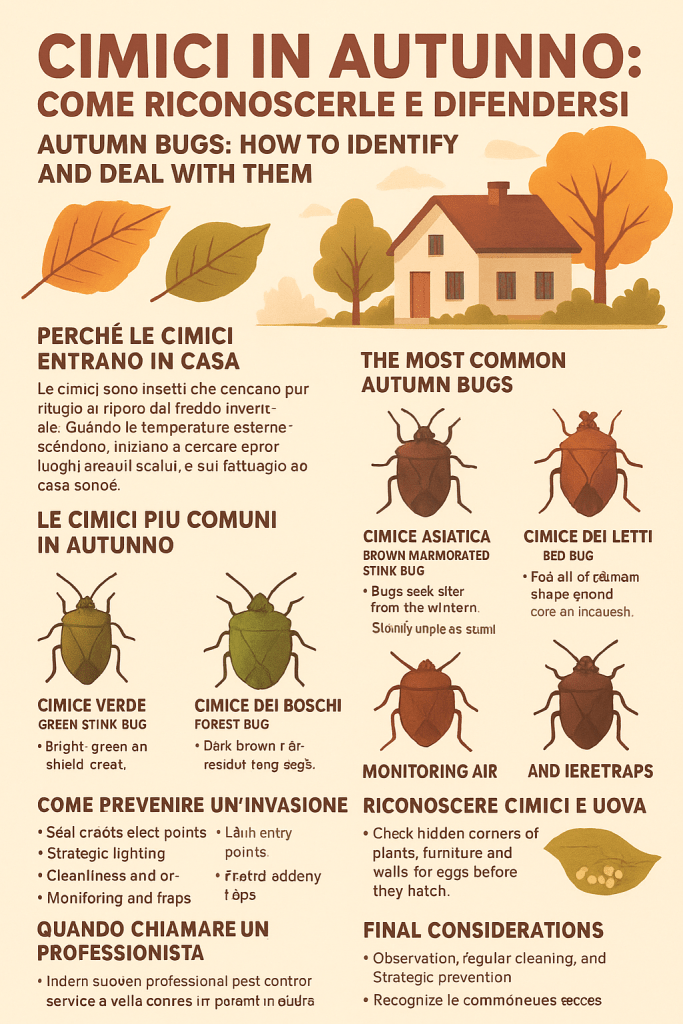
Autumn Bugs: How to Identify and Deal with Them
Con l’arrivo dell’autunno, le temperature calano e le giornate si accorciano. Questo cambiamento climatico porta con sé un fenomeno ben noto a molti: l’invasione delle cimici in casa. In questo articolo approfondiremo tutto ciò che c’è da sapere sulle cimici, come riconoscerle e come prevenirne la comparsa, con consigli pratici utili per la tua casa e il tuo giardino.
With the arrival of autumn, temperatures drop and the days get shorter. This seasonal change brings a well-known phenomenon: the invasion of bugs in homes. In this article, we will delve into everything you need to know about bugs, how to identify them, and how to prevent their appearance, with practical tips for your home and garden.
Perché le cimici entrano in casa
Why Bugs Enter Homes
Le cimici sono insetti che cercano rifugio al riparo dal freddo invernale. Quando le temperature esterne scendono, iniziano a cercare luoghi caldi, asciutti e protetti, spesso trovando nelle case un ambiente ideale. Le finestre, le porte, le crepe nei muri o le fessure nei serramenti diventano i loro punti di ingresso principali.
Bugs seek shelter from the winter cold. As outdoor temperatures drop, they start looking for warm, dry, and protected places, often finding homes an ideal environment. Windows, doors, cracks in walls, and gaps in frames become their main entry points.
Oltre al riparo, le cimici cercano anche cibo. Alcune specie si nutrono di piante ornamentali, frutti caduti o residui organici, mentre altre sono più “affamate” di sangue animale o umano. La combinazione di cibo disponibile e protezione le spinge a invadere le abitazioni.
Besides shelter, bugs also look for food. Some species feed on ornamental plants, fallen fruits, or organic debris, while others are more “interested” in animal or human blood. The combination of available food and protection drives them to invade homes.
Le cimici più comuni in autunno
The Most Common Autumn Bugs
Esistono diverse specie di cimici che possono invadere case e giardini in autunno. Ecco le principali, con caratteristiche e consigli per riconoscerle.
There are several species of bugs that may invade homes and gardens in autumn. Here are the main ones, with characteristics and tips for identification.
1. Cimice asiatica (Halyomorpha halys)
1. Brown Marmorated Stink Bug
Originaria dell’Asia orientale, questa cimice è ormai diffusa in Europa. È facilmente riconoscibile per il suo colore marrone con striature scure sulle ali e un profumo sgradevole se schiacciata. Si accumula spesso vicino alle finestre e può entrare in grandi numeri.
Native to East Asia, this bug is now widespread in Europe. It is easily recognizable by its brown color with dark stripes on the wings and an unpleasant smell if crushed. It often gathers near windows and can enter in large numbers.
Consigli pratici / Practical Tips:
- Sigillare crepe e fessure attorno a porte e finestre.
- Evitare di schiacciarle; usare aspirapolvere o panni umidi per rimuoverle.
- Tenere le luci esterne spente la notte per non attirarle.
Seal cracks and gaps around doors and windows.
Avoid crushing them; use a vacuum or damp cloth to remove them.
Keep outdoor lights off at night to avoid attracting them.
2. Cimice dei letti (Cimex lectularius)
2. Bed Bug
Piccola e piatta, di colore marrone scuro, la cimice dei letti si nasconde nei materassi, nelle fessure dei mobili e nelle lenzuola. Esce di notte per nutrirsi di sangue umano e può causare prurito e irritazioni cutanee.
Small and flat, dark brown in color, the bed bug hides in mattresses, cracks in furniture, and bedding. It comes out at night to feed on human blood and can cause itching and skin irritation.
Consigli pratici / Practical Tips:
- Lavare la biancheria a temperature elevate.
- Controllare materassi e cuscini periodicamente.
- Usare coprimaterassi anti-cimici e aspirare spesso.
Wash linens at high temperatures.
Check mattresses and pillows regularly.
Use mattress covers and vacuum frequently.
3. Cimice verde (Nezara viridula)
3. Green Stink Bug
Di colore verde brillante, è più comune in giardini e orti. Si nutre di frutti e verdure, provocando danni alle coltivazioni. È facilmente riconoscibile per la sua forma a scudo e il colore uniforme.
Bright green in color, it is more common in gardens and orchards. It feeds on fruits and vegetables, causing damage to crops. It is easily recognizable by its shield shape and uniform color.
Consigli pratici / Practical Tips:
- Rimuovere frutti e ortaggi caduti.
- Utilizzare trappole cromatiche o feromoni per monitorarne la presenza.
- Controllare le piante regolarmente per rimuovere adulti e uova.
Remove fallen fruits and vegetables.
Use color traps or pheromones to monitor their presence.
Check plants regularly to remove adults and eggs.
4. Cimice dei boschi
4. Forest Bug
Queste cimici vivono prevalentemente all’aperto, tra foglie cadute e sottobosco. In autunno, alcune specie si spostano verso case e garage in cerca di riparo. Possono essere di colore marrone scuro o rossastro e hanno zampe lunghe e sottili.
These bugs primarily live outdoors, among fallen leaves and undergrowth. In autumn, some species move towards homes and garages seeking shelter. They can be dark brown or reddish in color and have long, thin legs.
Consigli pratici / Practical Tips:
- Tenere pulito il giardino da foglie e detriti.
- Installare reti alle finestre e porte del garage.
- Evitare accumuli di legna vicino alla casa.
Keep the garden clean of leaves and debris.
Install screens on windows and garage doors.
Avoid stacking firewood near the house.
Come prevenire un’invasione
How to Prevent an Infestation
La prevenzione è sempre più efficace dell’intervento. Ecco alcune strategie pratiche per ridurre il rischio di infestazioni autunnali.
Prevention is always more effective than intervention. Here are some practical strategies to reduce the risk of autumn infestations.
1. Sigillare gli ingressi
1. Seal Entry Points
Verificare porte, finestre e eventuali crepe nei muri. Utilizzare guarnizioni, silicone o spazzole anti-insetto per bloccare i passaggi.
Check doors, windows, and any wall cracks. Use seals, silicone, or insect brushes to block access points.
2. Illuminazione strategica
2. Strategic Lighting
Le cimici vengono attratte dalle luci. Tenere accese solo le luci necessarie e prediligere lampade a luce calda, meno attrattive.
Bugs are attracted to lights. Keep only necessary lights on and favor warm light lamps, which are less attractive.
3. Pulizia e ordine
3. Cleanliness and Order
Rimuovere foglie cadute, frutti marci e residui vegetali dal giardino. Una manutenzione costante riduce i rifugi naturali degli insetti.
Remove fallen leaves, rotten fruits, and plant debris from the garden. Constant maintenance reduces insects’ natural shelters.
4. Monitoraggio e trappole
4. Monitoring and Traps
Utilizzare trappole adesive, feromoni o barriere fisiche per intercettare e ridurre la popolazione di cimici.
Use sticky traps, pheromones, or physical barriers to intercept and reduce bug populations.
Riconoscere cimici e uova
Identifying Bugs and Eggs
Le cimici adulte sono più facili da identificare per colore, forma e dimensioni, ma le uova richiedono attenzione. Solitamente sono piccole, di colore chiaro o giallastro, raggruppate in grappoli sotto foglie o fessure.
Adult bugs are easier to identify by color, shape, and size, but eggs require attention. They are usually small, pale or yellowish, grouped in clusters under leaves or cracks.
Consiglio pratico: controllare regolarmente angoli nascosti di piante, mobili e pareti per individuare uova prima che si schiudano.
Practical tip: regularly check hidden corners of plants, furniture, and walls to spot eggs before they hatch.
Quando chiamare un professionista
When to Call a Professional
Se l’invasione diventa massiccia o coinvolge specie particolarmente difficili da rimuovere, come le cimici dei letti, è consigliabile rivolgersi a un disinfestatore professionista. L’intervento mirato può eliminare rapidamente l’infestazione e prevenire danni futuri.
If the infestation becomes massive or involves particularly hard-to-remove species, such as bed bugs, it is advisable to contact a professional pest control service. Targeted intervention can quickly eliminate the infestation and prevent future damage.
Considerazioni finali
Final Considerations
L’autunno porta con sé il fascino del cambiamento e dei colori, ma anche la sfida delle cimici. Con osservazione attenta, pulizia regolare e prevenzione strategica, è possibile convivere con questi insetti senza subirne i danni. Ricordati di riconoscere le specie più comuni e di intervenire in modo sicuro e responsabile.
Autumn brings the charm of change and colors, but also the challenge of bugs. With careful observation, regular cleaning, and strategic prevention, it is possible to coexist with these insects without suffering damage. Remember to recognize the most common species and act safely and responsibly.
 458socom.org
Rispondi