🇬🇧🇦🇹🇬🇧🇦🇹🇬🇧🇦🇹
Boxelder Bug: The Forgotten Autumn Visitor
Introduzione / Introduction
L’autunno porta con sé colori caldi, foglie cadenti e un’atmosfera di quiete. Ma, insieme a questo scenario pittoresco, emergono anche insetti che trovano proprio in questa stagione il loro momento di maggior visibilità. Uno di questi è la cimice dei semi di acero (Boisea trivittata), un insetto poco noto al grande pubblico europeo ma ben presente in Nord America e, sempre più spesso, osservato anche altrove.
Autumn brings with it warm colors, falling leaves, and a quiet atmosphere. But along with this picturesque scenery, insects emerge that find in this season their peak of activity. One of these is the boxelder bug (Boisea trivittata), an insect little known to the general European public but widespread in North America and increasingly observed elsewhere.
Aspetto e Caratteristiche / Appearance and Features
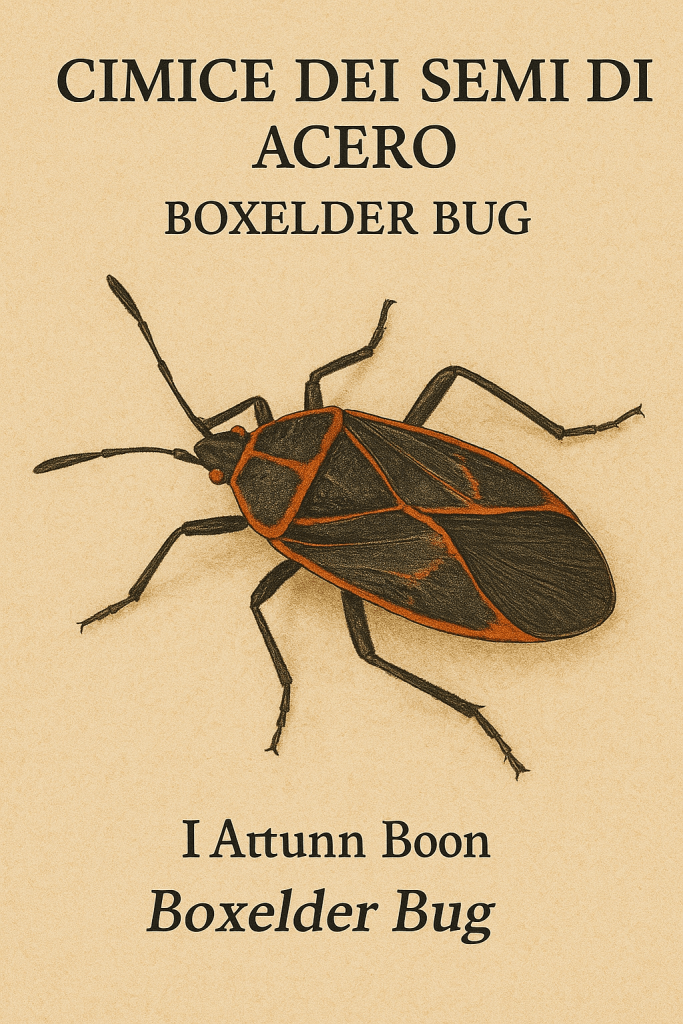
La cimice dei semi di acero è facilmente riconoscibile grazie al suo corpo nero con linee arancioni o rossastre lungo i margini delle ali e del torace. Misura circa 12-14 millimetri e ha una forma allungata tipica dei Rhopalidae, la famiglia a cui appartiene.
The boxelder bug is easily recognizable thanks to its black body with orange or reddish lines along the edges of the wings and thorax. It measures about 12–14 millimeters and has the elongated shape typical of Rhopalidae, the family it belongs to.
Ciclo Vitale / Life Cycle
Durante l’estate, le cimici si nutrono soprattutto di semi e foglie di acero americano (Acer negundo), pianta che prediligono. Con l’arrivo dell’autunno, iniziano a cercare rifugio in grandi gruppi, spesso avvicinandosi a case, fessure nei muri o cortili assolati. È in questa fase che diventano “ospiti indesiderati” per molte persone.
During summer, these bugs feed mainly on the seeds and leaves of the boxelder tree (Acer negundo), their preferred host. With the arrival of autumn, they begin to seek shelter in large groups, often approaching houses, wall cracks, or sunny yards. It is at this stage that they become “unwanted guests” for many people.
Comportamento Autunnale / Autumn Behavior
Ciò che rende affascinante questo insetto è il suo comportamento collettivo: migliaia di individui possono riunirsi insieme su superfici calde, pareti esposte al sole o tronchi. Questo fenomeno, se da un lato può impressionare, dall’altro rivela un adattamento perfetto al freddo imminente.
What makes this insect fascinating is its collective behavior: thousands of individuals can gather together on warm surfaces, sun-exposed walls, or tree trunks. This phenomenon, while impressive, also reveals a perfect adaptation to the coming cold.
Impatto sull’Uomo / Impact on Humans
Contrariamente a quanto si potrebbe pensare, la cimice dei semi di acero non è dannosa per l’uomo: non punge, non trasmette malattie e non provoca danni strutturali alle abitazioni. Tuttavia, la sua presenza massiva può diventare fastidiosa. In ambienti interni tende a cercare angoli riparati e può rimanere inattiva per mesi.
Contrary to what one might think, the boxelder bug is not harmful to humans: it does not bite, does not transmit diseases, and does not cause structural damage to buildings. However, its massive presence can become bothersome. Indoors, it tends to seek sheltered corners and can remain inactive for months.
Ecologia e Ruolo Naturale / Ecology and Natural Role
In natura, queste cimici svolgono un ruolo importante: regolano la dispersione dei semi di acero e fanno parte della catena alimentare, servendo da nutrimento a uccelli e piccoli predatori. Nonostante vengano spesso viste come parassiti, il loro ruolo ecologico è tutt’altro che marginale.
In nature, these bugs play an important role: they regulate the dispersion of boxelder seeds and are part of the food chain, serving as food for birds and small predators. Although often seen as pests, their ecological role is far from negligible.
Gestione e Convivenza / Management and Coexistence
La strategia più efficace non è l’eliminazione, bensì la prevenzione: sigillare fessure, utilizzare zanzariere e mantenere le aree domestiche pulite. L’uso di insetticidi è raramente giustificato, data la bassa pericolosità di questi insetti. Un approccio sostenibile permette una convivenza più equilibrata.
The most effective strategy is not elimination but prevention: sealing cracks, using screens, and keeping domestic areas clean. The use of insecticides is rarely justified, given the low harmfulness of these insects. A sustainable approach allows for a more balanced coexistence.
Significato Culturale e Curiosità / Cultural Meaning and Curiosities
Negli Stati Uniti, la cimice dei semi di acero è diventata parte del folklore urbano, citata spesso in articoli e racconti come simbolo delle “invasioni autunnali”. Alcuni la vedono persino come una sorta di “orologio naturale”, che segna il passaggio dalla stagione calda a quella fredda.
In the United States, the boxelder bug has become part of urban folklore, often cited in articles and stories as a symbol of “autumn invasions.” Some even see it as a sort of “natural clock,” marking the transition from the warm to the cold season.
Conclusione / Conclusion
La cimice dei semi di acero è un perfetto esempio di come la percezione umana possa trasformare un insetto innocuo in un “nemico stagionale”. In realtà, la sua storia naturale racconta un adattamento raffinato e un ruolo ecologico prezioso. L’autunno, con la sua bellezza e i suoi ospiti inaspettati, non smette mai di sorprendere.
The boxelder bug is a perfect example of how human perception can turn a harmless insect into a “seasonal enemy.” In reality, its natural history tells of a refined adaptation and a precious ecological role. Autumn, with its beauty and unexpected guests, never ceases to amaze.
 458socom.org
Rispondi