🇦🇹🇬🇧🇦🇹🇬🇧🇦🇹🇬🇧🇦🇹
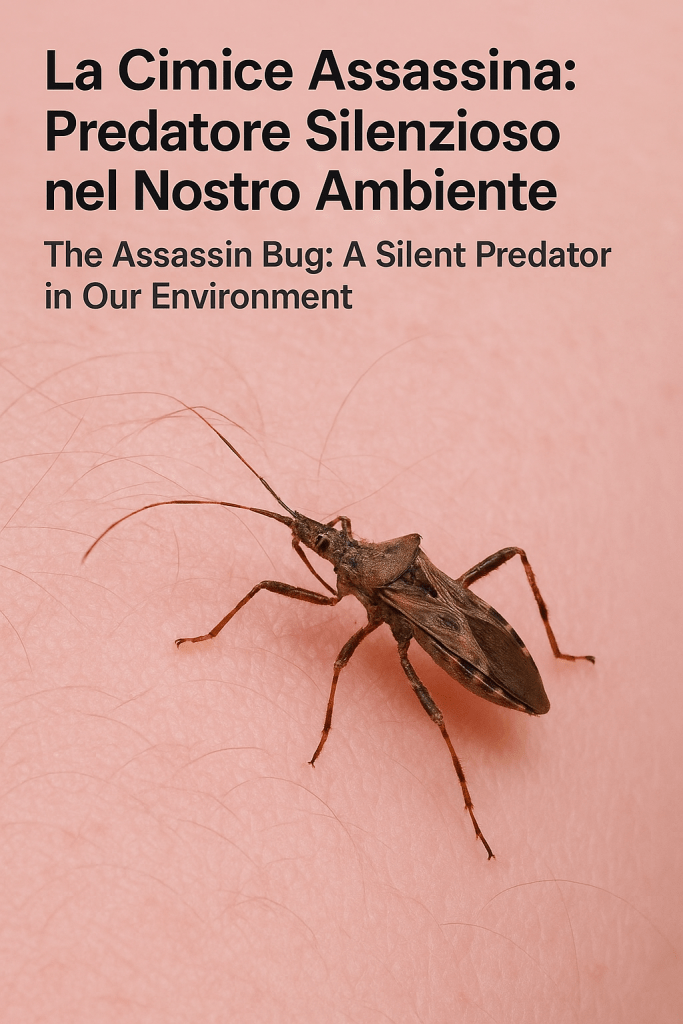
The Assassin Bug: A Silent Predator in Our Environment
1. Introduzione: un killer naturale dal nome evocativo
La cimice assassina è uno degli insetti più affascinanti e fraintesi che si possano incontrare nei giardini o addirittura dentro casa. A differenza delle cimici dei letti, non si nutre del nostro sangue abitualmente, ma è un predatore di altri insetti, dotato di un apparato boccale a stiletto capace di perforare e succhiare i fluidi delle prede. Questo la rende un alleato naturale per chi desidera ridurre la presenza di insetti nocivi.
The assassin bug is one of the most fascinating yet misunderstood insects found in gardens — and sometimes even inside homes. Unlike bed bugs, it does not normally feed on human blood. Instead, it preys on other insects using its needle-like mouthpart to pierce and suck out their internal fluids. This makes it a natural ally for anyone seeking to reduce harmful insect populations.
2. Morfologia e comportamento
La cimice assassina presenta un corpo allungato, zampe sottili ma robuste e una testa con un rostro prominente. Può variare nel colore dal marrone al nero, con riflessi rossastri o aranciati. Le sue zampe anteriori sono spesso adattate per catturare e immobilizzare le prede. Quando caccia, rimane immobile per lunghi minuti, per poi lanciarsi in un attacco fulmineo.
The assassin bug has an elongated body, slender yet strong legs, and a distinct, pointed head with a prominent beak (rostrum). Its coloration can range from brown to black, sometimes with reddish or orange hues. The front legs are adapted for grabbing and holding prey. When hunting, it stays motionless for minutes before launching a lightning-fast attack.
3. L’arma segreta: il rostro velenoso
Il rostro della cimice assassina non serve solo per nutrirsi, ma anche per iniettare una saliva tossica che paralizza la preda e inizia a dissolverne i tessuti interni. Dopo pochi secondi, l’insetto succhia il contenuto liquefatto del corpo della vittima. Questo metodo di alimentazione è altamente efficiente e permette alla cimice di uccidere prede anche molto più grandi di lei.
The assassin bug’s beak is not only a feeding tool but also a deadly weapon. It injects toxic saliva that paralyzes the prey and begins digesting it from the inside out. Within seconds, the insect can suck up the liquefied remains. This feeding strategy is extremely efficient and allows it to kill prey much larger than itself.
4. Dove vive e dove si nasconde
In natura, la cimice assassina vive in prati, giardini, siepi e boschi, dove caccia mosche, zanzare, bruchi e altri piccoli artropodi. Tuttavia, con l’arrivo del freddo, può cercare rifugio in ambienti domestici, entrando attraverso fessure, finestre o infissi. Ama i luoghi asciutti e tranquilli, come dietro i mobili, nelle tende o nei garage.
In the wild, assassin bugs live in meadows, gardens, hedges, and forests, where they hunt flies, mosquitoes, caterpillars, and other small arthropods. However, when the weather turns cold, they may seek shelter indoors, sneaking through cracks, windows, or door frames. They prefer dry, quiet places such as behind furniture, inside curtains, or in garages.
5. Quanto può sopravvivere in casa
Una cimice assassina può sopravvivere in casa anche per diversi mesi, soprattutto se trova insetti da cacciare. In assenza di cibo, entra in uno stato di torpore, riducendo il metabolismo e consumando pochissime energie. In condizioni ottimali di temperatura (tra i 20 e i 25 °C), può resistere fino a sei mesi senza nutrirsi.
An assassin bug can survive indoors for several months, especially if it finds other insects to feed on. When food is scarce, it enters a dormant state, lowering its metabolism and conserving energy. Under optimal indoor temperatures (around 20–25°C or 68–77°F), it can survive up to six months without feeding.
6. È pericolosa per l’uomo?
Nonostante l’aspetto minaccioso e il nome inquietante, la cimice assassina non è generalmente pericolosa per l’uomo. Tuttavia, può pungere se manipolata o schiacciata. La puntura è dolorosa, simile a quella di una vespa, e può causare gonfiore, arrossamento e prurito locale. Alcune specie tropicali, come Triatoma infestans, sono vettori della malattia di Chagas, ma non quelle presenti in Italia o in Europa.
Despite its fearsome name and appearance, the assassin bug is not usually dangerous to humans. It can, however, bite if handled or threatened. The bite is painful, similar to a wasp sting, and may cause swelling, redness, or itching. Some tropical species, such as Triatoma infestans, are known vectors of Chagas disease — but these species are not found in Italy or Europe.
7. Ruolo ecologico e utilità nel giardino
Dal punto di vista ecologico, la cimice assassina è un prezioso regolatore naturale delle popolazioni di insetti nocivi. Si nutre di afidi, larve di lepidotteri, zanzare e persino di piccole cavallette. In un giardino sano, la sua presenza indica un equilibrio biologico e riduce la necessità di trattamenti chimici.
From an ecological perspective, the assassin bug is a valuable natural regulator of pest populations. It feeds on aphids, caterpillars, mosquitoes, and even small grasshoppers. In a healthy garden, its presence signals a balanced ecosystem and reduces the need for chemical treatments.
8. Differenze tra cimice assassina e cimice dei letti
Molti confondono la cimice assassina con la cimice dei letti. Tuttavia, quest’ultima è più piccola, di colore marrone chiaro e ha un corpo appiattito. Le cimici dei letti vivono solo di sangue e si nascondono vicino ai letti, mentre la cimice assassina è più grande, snella e attiva di giorno, predando all’aperto.
Many people mistake assassin bugs for bed bugs. However, bed bugs are smaller, lighter brown, and have a flattened body. Bed bugs feed exclusively on blood and hide near beds, whereas assassin bugs are larger, slimmer, and active during the day, hunting outdoors.
9. Come comportarsi se la trovi in casa
Se trovi una cimice assassina in casa, non è necessario allarmarsi. Puoi catturarla delicatamente con un bicchiere e liberarla all’esterno. Evita di schiacciarla o maneggiarla a mani nude. La sua presenza non indica infestazione, ma solo la ricerca di un rifugio temporaneo.
If you find an assassin bug indoors, there’s no reason to panic. You can gently trap it under a glass and release it outside. Avoid crushing or handling it with bare hands. Its presence does not mean an infestation — it simply sought temporary shelter.
10. Riproduzione e ciclo vitale
Il ciclo vitale della cimice assassina comprende uovo, ninfa e adulto. Le femmine depongono le uova su foglie o superfici protette, e le ninfe, simili agli adulti ma prive di ali, attraversano varie mute prima di raggiungere la maturità. L’intero ciclo può durare da 2 a 5 mesi, a seconda della temperatura e della disponibilità di prede.
The life cycle of the assassin bug includes egg, nymph, and adult stages. Females lay eggs on leaves or hidden surfaces, and the nymphs, resembling smaller wingless adults, go through several molts before reaching maturity. The entire cycle can last from two to five months, depending on temperature and prey availability.
11. Curiosità biologiche e strategie di caccia
Alcune specie di cimici assassine utilizzano strategie sofisticate per cacciare. Alcune si fingono prede, altre rilasciano sostanze attrattive per attirare insetti. Vi sono perfino specie che ricoprono il corpo con i resti delle loro vittime come mimetismo o deterrente contro i predatori.
Certain assassin bug species use highly sophisticated hunting strategies. Some play dead or pretend to be prey, while others release chemical attractants to lure victims closer. Some species even cover their bodies with the remains of past prey as camouflage or to deter predators.
12. Conclusione: un piccolo alleato da rispettare
La cimice assassina non è un nemico, ma un prezioso alleato naturale. Il suo ruolo di predatore aiuta a mantenere l’equilibrio biologico e a ridurre l’uso di pesticidi. Osservarla nel proprio giardino è un’occasione per comprendere meglio l’importanza della biodiversità e dei meccanismi invisibili che mantengono in salute gli ecosistemi.
The assassin bug is not an enemy but a valuable natural ally. Its role as a predator helps maintain biological balance and reduces the need for pesticides. Observing it in your garden is an opportunity to better understand the importance of biodiversity and the invisible mechanisms that keep ecosystems healthy.
 458socom.org
Rispondi