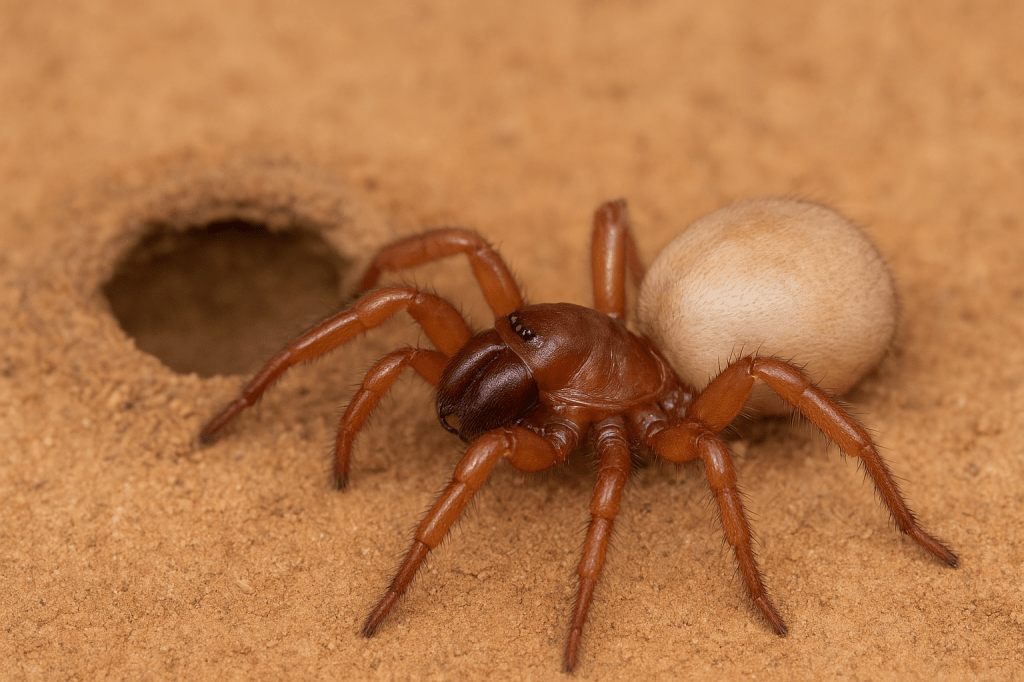
🕷️ The Mysterious World of the Trapdoor Spider
Introduzione – Un incontro con l’oscurità del suolo
Introduction – A Meeting with the Darkness Beneath the Soil
Nascosto nel terreno, silenzioso e invisibile agli occhi del mondo, vive uno degli artropodi più enigmatici della natura: il ragno botola, un predatore paziente e ingegnoso che costruisce la propria casa come una trappola perfetta. La recente scoperta di una nuova specie, annunciata proprio nel periodo di Halloween, ha acceso i riflettori su questo gruppo di ragni antichi e poco conosciuti.
Hidden in the ground, silent and unseen to the human eye, lives one of nature’s most enigmatic arthropods: the trapdoor spider, a patient and ingenious predator that builds its home as a perfect trap. The recent discovery of a new species, announced just in time for Halloween, has turned the spotlight on this ancient and mysterious group of spiders.
Origini e classificazione
Origins and Classification
I ragni botola appartengono a un gruppo primitivo di Araneae, spesso classificato nella famiglia Ctenizidae o in famiglie affini come Idiopidae o Migidae, a seconda della zona geografica e delle caratteristiche morfologiche. Questi ragni sono considerati “antichi” perché conservano tratti evolutivi risalenti a centinaia di milioni di anni fa, come le robuste cheliceri verticali e la disposizione primitiva degli occhi.
Trapdoor spiders belong to a primitive group of Araneae, often classified in the family Ctenizidae or related ones such as Idiopidae or Migidae, depending on geography and morphology. These spiders are considered “ancient” because they retain evolutionary traits dating back hundreds of millions of years, such as their strong vertical chelicerae and primitive eye arrangement.
Il nome e la trappola perfetta
The Name and the Perfect Trap
Il nome “ragno botola” deriva dal suo comportamento unico: costruisce una tana sotterranea chiusa da un coperchio mimetico, una vera e propria botola fatta di seta, terra e frammenti vegetali. L’ingresso resta invisibile per le prede che passano ignare sopra il suolo. Quando un insetto o un piccolo vertebrato vibra vicino all’apertura, il ragno spalanca la botola e afferra la vittima in un attimo.
The name “trapdoor spider” comes from its unique behavior: it builds an underground burrow sealed by a camouflaged lid, a real trapdoor made of silk, soil, and plant fragments. The entrance remains invisible to unsuspecting prey. When an insect or small vertebrate moves nearby, the spider bursts out, seizing its victim in an instant.
Anatomia e adattamenti
Anatomy and Adaptations
Questi ragni possiedono un corpo massiccio, zampe forti e pelose, e potenti cheliceri in grado di infliggere morsi rapidi e precisi. La loro colorazione varia dal marrone al nero lucido, adattata a vivere in ambienti poco illuminati. L’addome (opisthosoma) è spesso ricoperto da una sottile peluria sensoriale, che rileva vibrazioni minime nel terreno.
These spiders have a robust body, strong hairy legs, and powerful chelicerae capable of delivering fast, precise bites. Their coloration ranges from brown to glossy black, perfectly adapted to low-light environments. The abdomen (opisthosoma) is covered with fine sensory hairs that detect the slightest vibrations in the soil.
Un adattamento affascinante è rappresentato dalle setole sensoriali poste sulle zampe anteriori, che permettono al ragno di percepire il passaggio delle prede anche senza uscire dal rifugio. È un sistema di caccia basato sulla pazienza: a volte il ragno resta immobile per giorni, in attesa del momento giusto.
A fascinating adaptation is the presence of sensory hairs on the front legs, allowing the spider to detect prey movements without leaving its burrow. It’s a hunting system built on patience: sometimes the spider remains still for days, waiting for the perfect moment.
Habitat e distribuzione
Habitat and Distribution
I ragni botola si trovano in varie regioni del mondo: dalle foreste tropicali dell’Australia e del Sud-est asiatico fino alle zone temperate del Mediterraneo e del Nord America. Preferiscono terreni soffici e umidi, dove scavano tane profonde anche fino a 30 centimetri.
Trapdoor spiders inhabit various regions worldwide: from tropical forests in Australia and Southeast Asia to temperate areas of the Mediterranean and North America. They prefer soft, moist soils, where they dig burrows that can reach depths of up to 30 centimeters.
Le tane vengono spesso costruite lungo pendii o vicino a radici, per garantire stabilità e drenaggio. Alcune specie rinforzano le pareti interne con seta, mentre altre costruiscono una camera secondaria usata come rifugio durante la muta.
Burrows are often built along slopes or near roots to ensure stability and drainage. Some species reinforce the inner walls with silk, while others create a secondary chamber used as a refuge during molting.
Ciclo vitale e comportamento
Life Cycle and Behavior
La femmina di ragno botola è sedentaria: trascorre tutta la vita nella stessa tana, che ripara e amplia nel corso degli anni. Può vivere anche più di 20 anni, un’età eccezionale per un aracnide. Il maschio, invece, lascia la propria tana solo durante la stagione riproduttiva per cercare una compagna.
The female trapdoor spider is sedentary: she spends her entire life in the same burrow, which she maintains and expands over the years. She can live for more than 20 years, an exceptional age for an arachnid. The male, however, leaves his burrow only during the breeding season to search for a mate.
L’accoppiamento è un momento rischioso: se il maschio non si avvicina con cautela, può essere confuso per una preda. Dopo la fecondazione, la femmina depone le uova in un sacco sericeo e sorveglia i piccoli fino alla prima muta. I giovani, una volta indipendenti, scavano le proprie micro-tane nei dintorni.
Mating is a risky affair: if the male approaches recklessly, he may be mistaken for prey. After fertilization, the female lays her eggs in a silky sac and guards the spiderlings until their first molt. Once independent, the young dig their own miniature burrows nearby.
Difese e predatori
Defenses and Predators
Nonostante la sua natura aggressiva verso le prede, il ragno botola è vulnerabile ai predatori naturali come vespe parassite, formiche e piccoli mammiferi. Quando minacciato, si ritrae rapidamente nel rifugio e blocca la botola con le zampe posteriori, rendendosi quasi invulnerabile.
Despite its aggressive nature toward prey, the trapdoor spider is vulnerable to natural predators such as parasitic wasps, ants, and small mammals. When threatened, it quickly retreats into its burrow, bracing the trapdoor with its hind legs to become almost invincible.
Alcune specie possiedono peli urticanti o mostrano comportamenti intimidatori, come sollevare le zampe anteriori e mostrare i cheliceri. Tuttavia, raramente mordono gli esseri umani, e il loro veleno è generalmente innocuo per l’uomo.
Some species have urticating hairs or display intimidating postures, raising their front legs and showing their chelicerae. However, they rarely bite humans, and their venom is generally harmless.
La nuova specie e il fascino della scoperta
The New Species and the Fascination of Discovery
La recente scoperta di una nuova specie di ragno botola ha riacceso l’interesse scientifico verso questo gruppo. Gli studiosi ne hanno evidenziato la struttura corporea unica e la capacità di adattarsi a microambienti molto specifici. È un promemoria di quanto la biodiversità del suolo resti ancora in gran parte inesplorata.
The recent discovery of a new species of trapdoor spider has reignited scientific interest in this group. Researchers highlighted its unique body structure and remarkable adaptation to highly specific microhabitats. It’s a reminder of how much of our planet’s soil biodiversity remains unexplored.
La specie presenta caratteristiche morfologiche particolari, come un corpo più chiaro e una cuticola più spessa, che potrebbero essere adattamenti a un terreno più sabbioso. Questo tipo di evoluzione dimostra quanto gli aracnidi siano plastici e pronti a cambiare per sopravvivere.
This species displays particular morphological traits, such as a lighter body and thicker cuticle, possibly adaptations to sandy soil. This kind of evolution shows how plastic and adaptable arachnids are in the face of environmental challenges.
Ruolo ecologico e importanza per l’ambiente
Ecological Role and Environmental Importance
I ragni botola svolgono un ruolo essenziale negli ecosistemi. Controllano le popolazioni di insetti, riducendo la diffusione di parassiti agricoli e mantenendo l’equilibrio tra predatori e prede. Inoltre, la loro attività di scavo contribuisce ad aerare il terreno, migliorandone la qualità.
Trapdoor spiders play an essential role in ecosystems. They control insect populations, reducing agricultural pests and maintaining balance between predators and prey. Moreover, their digging activity helps aerate the soil, improving its structure and fertility.
Studiare questi ragni significa comprendere meglio la complessità della vita sotterranea, un mondo che rappresenta quasi la metà della biodiversità terrestre ma che resta spesso invisibile.
Studying these spiders means understanding the complexity of underground life — a world that represents almost half of all terrestrial biodiversity yet remains largely unseen.
Curiosità e miti
Curiosities and Myths
Nelle culture tradizionali, i ragni botola sono spesso associati a simbolismi di pazienza, astuzia e introspezione. La loro vita sotterranea li rende emblemi di chi lavora nell’ombra, costruendo con precisione e senza fretta.
In traditional cultures, trapdoor spiders are often associated with patience, cunning, and introspection. Their underground lifestyle makes them symbols of those who work in silence, building carefully and without haste.
Il loro comportamento ha ispirato anche la narrativa horror e la letteratura fantastica, dove la botola diventa metafora di ciò che si nasconde sotto la superficie: misteri, paure e segreti della natura.
Their behavior has also inspired horror and fantasy literature, where the trapdoor becomes a metaphor for what lies beneath the surface: mysteries, fears, and the secrets of nature.
Conclusione – Il custode invisibile della terra
Conclusion – The Invisible Guardian of the Earth
Il ragno botola è un simbolo di ingegno evolutivo e di equilibrio ecologico. Invisibile ma indispensabile, ricorda che anche i più piccoli abitanti del suolo custodiscono storie millenarie e segreti ancora da svelare. Ogni nuova scoperta su di loro amplia la nostra comprensione della vita e della sua straordinaria capacità di adattarsi.
The trapdoor spider stands as a symbol of evolutionary genius and ecological balance. Invisible yet indispensable, it reminds us that even the smallest dwellers of the soil hold ancient stories and secrets still waiting to be uncovered. Each new discovery about them expands our understanding of life and its extraordinary ability to adapt.
 458socom.org
Rispondi