🇬🇧🇦🇹🇬🇧🇦🇹🇬🇧
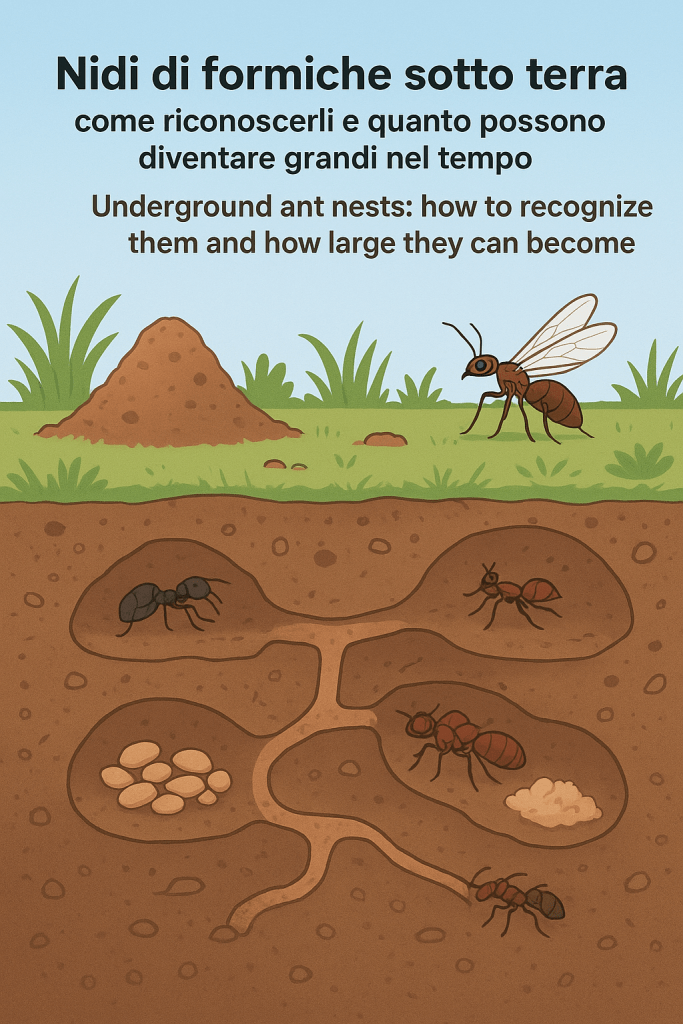
Underground ant nests: how to recognize them and how large they can become over time
1. Perché le formiche costruiscono nidi sotto terra
1. Why ants build underground nests
Le formiche scelgono il sottosuolo perché offre protezione, stabilità termica e umidità costante. Questi elementi sono fondamentali per la crescita della colonia e per lo sviluppo della covata.
Ants choose the soil because it offers protection, stable temperatures and constant humidity. These elements are essential for colony growth and brood development.
Il terreno permette inoltre un’espansione praticamente illimitata del nido.
The soil also allows the nest to expand almost without limits.
2. Come riconoscere un nido di formiche sotto terra
2. How to recognize an underground ant nest
2.1. Cumuli di terra all’ingresso
2.1. Mounds of soil at the entrance
Il segnale più evidente è la presenza di piccoli cumuli di terra smossa attorno a uno o più fori.
The clearest sign is the presence of small piles of loose soil around one or more holes.
La forma del cumulo cambia secondo la specie.
The shape of the mound changes depending on the species.
2.2. Traffico di formiche
2.2. Ant traffic
Un flusso continuo di operaie in entrata e uscita indica un nido attivo e ben avviato.
A continuous flow of workers going in and out indicates an active, established nest.
Le formiche che rientrano portano cibo o materiali, quelle che escono partono per la raccolta.
Returning ants carry food or materials; those exiting leave for foraging.
2.3. Terreno più morbido o irregolare
2.3. Softer or uneven soil
Il terreno può cedere leggermente al passo o presentare avvallamenti.
The soil may give slightly underfoot or show small depressions.
Questo segnala la presenza di gallerie sotterranee.
This indicates the presence of underground tunnels.
2.4. Formiche alate
2.4. Winged ants
Durante la sciamatura, formiche alate emergono improvvisamente dal suolo: è segno di un nido maturo.
During swarming, winged ants suddenly emerge from the soil: this is a sign of a mature nest.
2.5. Vegetazione alterata
2.5. Altered vegetation
Accumuli di terra possono soffocare radici e creare macchie irregolari nel prato.
Soil piles can suffocate roots and create irregular patches in the lawn.
3. Come è strutturato un nido sotterraneo
3. What an underground ant nest looks like
3.1. L’ingresso
3.1. The entrance
Piccolo, mimetizzato e spesso multiplo, per migliorare ventilazione e sicurezza.
Small, camouflaged and often multiple, improving ventilation and safety.
3.2. Le gallerie principali
3.2. Main tunnels
Sono le “autostrade” del nido, che collegano le camere più importanti.
These are the nest’s “highways”, connecting the most important chambers.
3.3. Le camere della covata
3.3. Brood chambers
Collocate nei livelli più umidi del terreno, tra 10 e 60 cm di profondità.
Located in the most humid soil layers, between 10 and 60 cm deep.
3.4. La camera della regina
3.4. The queen’s chamber
Sempre nelle zone più profonde e protette, talvolta oltre un metro.
Always in the deepest and most protected areas, sometimes over a meter below ground.
3.5. Magazzini alimentari
3.5. Food storage chambers
Alcune specie immagazzinano semi o resti di insetti in stanze dedicate.
Some species store seeds or insect remains in dedicated rooms.
3.6. Camere di ventilazione
3.6. Ventilation chambers
Servono a far circolare l’aria nei nidi più grandi.
They help air circulation in larger nests.
4. Come cresce un nido nel tempo
4. How a nest grows over time
4.1. Fase iniziale (0–6 mesi)
4.1. Initial phase (0–6 months)
Una sola regina scava una piccola camera e depone le prime uova.
A lone queen digs a small chamber and lays the first eggs.
4.2. Fase di espansione (6–24 mesi)
4.2. Expansion phase (6–24 months)
Le operaie costruiscono nuove gallerie e aumentano gli ingressi.
Workers build new tunnels and increase the number of entrances.
4.3. Fase matura (2–5 anni)
4.3. Mature phase (2–5 years)
Il nido diventa complesso, con molte camere e talvolta più regine.
The nest becomes complex, with many chambers and sometimes multiple queens.
4.4. Supercolonia (oltre 5 anni)
4.4. Supercolony (over 5 years)
Nidi interconnessi che ospitano centinaia di migliaia o milioni di formiche.
Interconnected nests that house hundreds of thousands or millions of ants.
5. Quanto può diventare grande un nido sotterraneo
5. How large an underground nest can grow
5.1. Dimensioni medie
5.1. Average size
Nei giardini:
In gardens:
- 1–3 metri di estensione
- 1–3 meters wide
- 40–80 cm di profondità
- 40–80 cm deep
- 5.000–30.000 formiche
- 5,000–30,000 ants
5.2. Nidi molto grandi
5.2. Very large nests
In condizioni ottimali:
In optimal conditions:
- 10–20 metri di estensione
- 10–20 meters wide
- oltre 150.000 formiche
- over 150,000 ants
- camere fino a 2 metri di profondità
- chambers up to 2 meters deep
5.3. Supercolonie
5.3. Supercolonies
Tanti nidi collegati che occupano porzioni intere di prati o boschi.
Multiple nests connected, occupying entire lawn or forest sections.
6. Differenze tra i nidi delle specie più comuni
6. Differences among the most common species
6.1. Formica nera del giardino
6.1. Black garden ant
- Nidi medi e multipli ingressi
- Medium-sized nests with multiple entrances
- Preferisce terreni umidi
- Prefers moist soil
6.2. Formica rossa
6.2. Red ant
- Cumuli più evidenti
- More prominent soil mounds
- Gallerie profonde
- Deep tunnels
6.3. Formiche del prato
6.3. Lawn ants
- Molti piccoli vulcanetti
- Many small soil mounds
- Colonizzazione rapida
- Rapid colonization
7. Come distinguere un nido attivo da uno abbandonato
7. How to distinguish an active nest from an abandoned one
Nido attivo – Active nest
- traffico di formiche
- ant traffic
- terra fresca
- fresh soil
- presenza di operaie
- presence of workers
Nido abbandonato – Abandoned nest
- fori chiusi
- sealed holes
- terra compatta
- compact soil
- nessuna operaia visibile
- no visible workers
8. Quanto dura un nido sotterraneo
8. How long an underground nest lasts
- Colonie comuni: 5–10 anni
- Common colonies: 5–10 years
- Specie longeve: 15–25 anni
- Long-lived species: 15–25 years
- Supercolonie: potenzialmente illimitate
- Supercolonies: potentially unlimited
9. Cosa fare quando si trova un nido
9. What to do when you find a nest
9.1. Quando NON intervenire
9.1. When NOT to intervene
- il nido non causa danni
- the nest causes no damage
- la specie è innocua
- the species is harmless
9.2. Quando intervenire
9.2. When intervention is necessary
- sollevamento del terreno
- soil lifting
- nido vicino a edifici
- nest close to buildings
- specie aggressive
- aggressive species
10. Conclusioni
10. Conclusions
Riconoscere un nido sotterraneo è essenziale per chi lavora con il verde. Le formiche possono creare strutture piccole o enormi, influenzando la salute del prato e l’equilibrio dell’ecosistema.
Recognizing an underground nest is essential for anyone who manages green areas. Ants can build small or enormous structures, influencing lawn health and the ecosystem balance.
Sapere localizzarli, comprenderne la crescita e valutarne l’impatto permette una gestione efficace e rispettosa del verde.
Knowing how to locate them, understand their growth and assess their impact allows effective and environmentally respectful management.
 458socom.org
Rispondi