🇦🇹🇬🇧🇦🇹🇬🇧🇦🇹
🤠
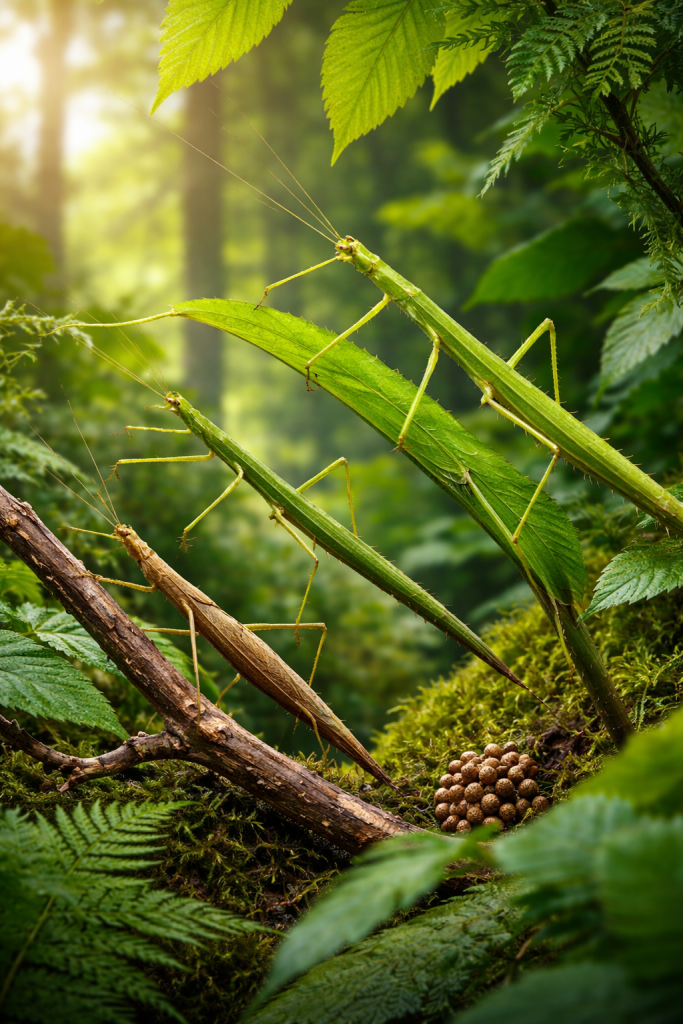
Stick Insects: Observation, Rearing, and Advanced Management
Introduzione / Introduction
Gli insetti stecco sono affascinanti non solo da studiare in natura, ma anche in cattività controllata. Osservazione e allevamento richiedono conoscenze precise su habitat, alimentazione e comportamento, per garantire benessere e successo riproduttivo.
Stick insects are fascinating not only to study in the wild but also in controlled captivity. Observation and rearing require precise knowledge of habitat, diet, and behavior to ensure welfare and reproductive success.
Preparazione dell’habitat / Habitat Preparation
Un terrario adeguato è fondamentale:
- Dimensioni e altezza: gli stecco amano arrampicarsi, quindi servono spazi verticali adeguati.
- Substrato: terra, fibra di cocco o muschio umido, che favorisce deposizione delle uova e mantiene umidità.
- Vegetazione: rami e foglie fresche per nutrimento e mimetismo.
An appropriate terrarium is essential:
- Size and height: stick insects enjoy climbing, so vertical space is crucial.
- Substrate: soil, coconut fiber, or moist moss, supporting egg-laying and humidity.
- Vegetation: fresh branches and leaves for feeding and camouflage.
Alimentazione e nutrizione / Feeding and Nutrition
- Foglie fresche quotidiane: quercia, faggio, ortensie e altre piante adatte.
- Rimozione foglie appassite: mantiene igiene e riduce rischio di malattie.
- Varietà: assicura crescita sana e mimetismo naturale.
- Daily fresh leaves: oak, beech, hydrangea, and other suitable plants.
- Remove wilted leaves: maintains hygiene and reduces disease risk.
- Variety: ensures healthy growth and natural camouflage.
Osservazione del comportamento / Observing Behavior
Gli stecco offrono spunti interessanti per studio:
- Mimetismo attivo: si muovono lentamente per imitare il vento.
- Alimentazione notturna: attività maggiore di notte.
- Interazioni sociali: generalmente solitari, ma osservando le femmine con uova si possono notare comportamenti protettivi indiretti.
Stick insects offer fascinating study opportunities:
- Active camouflage: move slowly to mimic the wind.
- Nocturnal feeding: most active at night.
- Social interactions: generally solitary, but observing egg-laying females reveals indirect protective behaviors.
Riproduzione in cattività / Reproduction in Captivity
- Partenogenesi: alcune femmine possono riprodursi senza maschi.
- Accoppiamento: se presenti maschi, occorre osservare corteggiamenti lenti.
- Deposizione uova: prediligono substrati umidi o rami nascosti.
- Parthenogenesis: some females can reproduce without males.
- Mating: when males are present, slow courtship is observed.
- Egg-laying: prefer moist substrates or hidden branches.
Salute e prevenzione malattie / Health and Disease Prevention
- Umidità controllata: evita eccesso di secchezza o ristagno d’acqua.
- Pulizia regolare: rimuovere residui vegetali e escrementi.
- Isolamento individui malati: per prevenire contagio in terrario condiviso.
- Controlled humidity: prevents excessive dryness or water stagnation.
- Regular cleaning: remove plant debris and droppings.
- Isolate sick individuals: prevents spread in shared terrariums.
Gestione avanzata / Advanced Management
- Monitoraggio crescita: osservare mute e sviluppo ninfe.
- Registrazione riproduzione: utile per studi genetici e selezione.
- Controllo predatori e parassiti: anche in cattività possono comparire acari o piccoli predatori accidentali.
- Growth monitoring: track molts and nymph development.
- Reproduction records: useful for genetic studies and selection.
- Predator and parasite control: mites or small accidental predators may appear even in captivity.
Conclusione / Conclusion
L’osservazione e l’allevamento degli insetti stecco richiedono attenzione, conoscenza e cura, ma offrono un’opportunità unica per studiare comportamenti complessi e strategie di sopravvivenza. Con gestione adeguata, è possibile ottenere individui sani e riproduzione regolare, arricchendo sia l’esperienza scientifica che divulgativa.
Observation and rearing of stick insects require attention, knowledge, and care, but offer a unique opportunity to study complex behaviors and survival strategies. With proper management, it is possible to obtain healthy individuals and regular reproduction, enriching both scientific and educational experiences.
 458socom.org
Rispondi