🇦🇹🇬🇧🇦🇹🇬🇧🇦🇹🇬🇧
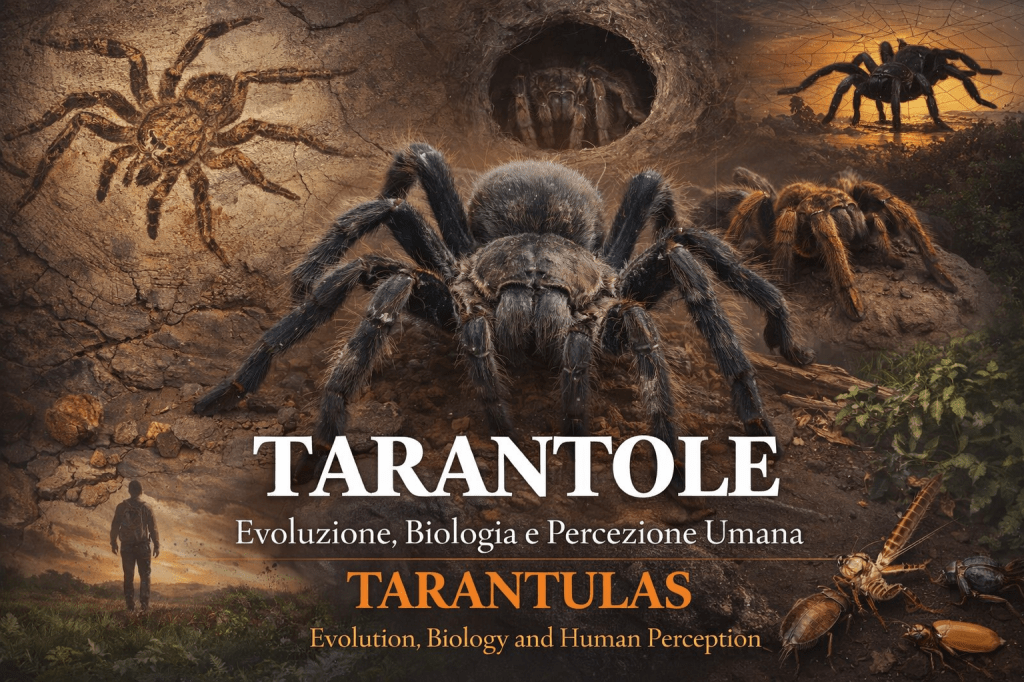
Tarantulas: evolution, biology and human perception of an ancient predator
Introduzione: tra paura e fascino
Introduction: between fear and fascination
Le tarantole rappresentano uno degli esempi più emblematici del rapporto complesso tra esseri umani e artropodi. Il loro aspetto, caratterizzato da dimensioni imponenti, corpo ricoperto di setole e movimenti lenti ma decisi, ha contribuito nel tempo a costruire un’immagine fortemente associata alla paura. Tuttavia questa percezione è spesso il risultato di un’interpretazione culturale più che di una reale comprensione biologica.
Tarantulas represent one of the most emblematic examples of the complex relationship between humans and arthropods. Their appearance, characterized by large size, hairy bodies, and slow but deliberate movements, has contributed over time to an image strongly associated with fear. However this perception is often the result of cultural interpretation rather than true biological understanding.
Le tarantole appartengono alla famiglia Theraphosidae, un gruppo estremamente diversificato che comprende centinaia di specie distribuite in vari continenti.
Tarantulas belong to the family Theraphosidae, a highly diverse group including hundreds of species distributed across different continents.
Origine evolutiva e antichità del gruppo
Evolutionary origin and antiquity of the group
Le tarantole fanno parte dell’ordine degli Araneae, ma rappresentano una linea evolutiva particolarmente antica. I loro antenati si sono differenziati milioni di anni fa, sviluppando caratteristiche morfologiche che ancora oggi risultano estremamente efficienti.
Tarantulas are part of the order Araneae but represent a particularly ancient evolutionary lineage. Their ancestors diverged millions of years ago, developing morphological traits that remain highly efficient today.
La loro struttura corporea riflette un modello conservativo, in cui la selezione naturale ha privilegiato stabilità e funzionalità piuttosto che cambiamenti radicali.
Their body structure reflects a conservative model where natural selection favored stability and functionality rather than radical change.
Morfologia: struttura e adattamenti
Morphology: structure and adaptations
Il corpo delle tarantole è diviso in due regioni principali: il cefalotorace e l’addome. Questa organizzazione è tipica dei ragni ma nelle tarantole assume proporzioni particolarmente evidenti.
The body of tarantulas is divided into two main regions: the cephalothorax and the abdomen. This organization is typical of spiders but becomes especially pronounced in tarantulas.
Le zampe robuste permettono movimenti lenti ma estremamente controllati, mentre i cheliceri sono adattati per iniettare veleno e immobilizzare la preda.
Their robust legs allow slow but highly controlled movements, while the chelicerae are adapted to inject venom and immobilize prey.
Un elemento distintivo è la presenza di peli urticanti in molte specie, utilizzati come meccanismo difensivo.
A distinctive feature is the presence of urticating hairs in many species, used as a defensive mechanism.
Il veleno: funzione e limiti
Venom: function and limits
Il veleno delle tarantole è spesso oggetto di fraintendimenti. Contrariamente a quanto si pensa, nella maggior parte delle specie non rappresenta un pericolo significativo per l’uomo.
Tarantula venom is often misunderstood. Contrary to common belief, in most species it does not pose a significant danger to humans.
La sua funzione principale è immobilizzare le prede, che consistono prevalentemente in insetti e piccoli invertebrati.
Its main function is to immobilize prey, which mainly consists of insects and small invertebrates.
Solo in rari casi può provocare effetti più intensi, generalmente limitati a dolore locale e irritazione.
Only in rare cases can it cause stronger effects, usually limited to local pain and irritation.
Strategia di predazione
Predation strategy
A differenza di molti altri ragni, le tarantole non costruiscono ragnatele per catturare attivamente le prede. Utilizzano invece una strategia basata sull’attesa e sull’attacco improvviso.
Unlike many other spiders, tarantulas do not build webs to actively capture prey. Instead they use a strategy based on ambush and sudden attack.
Rimangono immobili per lunghi periodi, percependo le vibrazioni del suolo attraverso sensori estremamente sensibili.
They remain still for long periods, detecting ground vibrations through highly sensitive sensors.
Quando una preda si avvicina, scattano rapidamente, dimostrando una velocità sorprendente rispetto al loro aspetto.
When prey approaches, they strike quickly, showing surprising speed compared to their appearance.
Habitat e distribuzione
Habitat and distribution
Le tarantole sono diffuse principalmente in ambienti tropicali e subtropicali, ma alcune specie si trovano anche in zone più temperate.
Tarantulas are mainly distributed in tropical and subtropical environments, although some species are found in more temperate regions.
Prediligono habitat dove possono scavare tane o trovare rifugi naturali.
They prefer habitats where they can dig burrows or find natural shelters.
Questi rifugi rappresentano un elemento centrale della loro ecologia.
These shelters are a central element of their ecology.
Comportamento e ritmo di vita
Behavior and life rhythm
Le tarantole sono generalmente animali solitari. Il loro comportamento è caratterizzato da lunghi periodi di inattività alternati a brevi momenti di intensa attività.
Tarantulas are generally solitary animals. Their behavior is characterized by long periods of inactivity alternating with brief moments of intense activity.
Questo ritmo consente di conservare energia e ridurre l’esposizione ai predatori.
This rhythm allows them to conserve energy and reduce exposure to predators.
Riproduzione e sviluppo
Reproduction and development
Il ciclo riproduttivo delle tarantole è complesso e coinvolge comportamenti altamente specifici.
The reproductive cycle of tarantulas is complex and involves highly specific behaviors.
Il maschio deve avvicinarsi alla femmina con cautela per evitare di essere scambiato per una preda.
The male must approach the female cautiously to avoid being mistaken for prey.
Dopo l’accoppiamento, la femmina depone le uova e le protegge fino alla schiusa.
After mating, the female lays eggs and protects them until hatching.
Relazione con l’uomo
Relationship with humans
Le tarantole suscitano reazioni contrastanti negli esseri umani. Da un lato sono temute, dall’altro affascinano e vengono allevate come animali esotici.
Tarantulas evoke mixed reactions in humans. On one hand they are feared, on the other they fascinate and are kept as exotic pets.
Questa ambivalenza riflette un rapporto complesso tra percezione e realtà biologica.
This ambivalence reflects a complex relationship between perception and biological reality.
Il ruolo ecologico
Ecological role
Le tarantole svolgono un ruolo importante negli ecosistemi come predatori.
Tarantulas play an important role in ecosystems as predators.
Contribuiscono al controllo delle popolazioni di insetti e altri piccoli organismi.
They contribute to controlling populations of insects and other small organisms.
Questo le rende elementi fondamentali nella stabilità degli ambienti in cui vivono.
This makes them fundamental elements in the stability of the environments they inhabit.
Conclusione: oltre il mito
Conclusion: beyond the myth
Le tarantole rappresentano un perfetto esempio di come la paura possa nascere dalla mancanza di conoscenza.
Tarantulas represent a perfect example of how fear can arise from lack of knowledge.
Analizzate dal punto di vista scientifico, emergono come organismi altamente specializzati, adattati e fondamentali per l’equilibrio degli ecosistemi.
When analyzed scientifically, they emerge as highly specialized, adapted organisms that are essential for ecosystem balance.
Comprendere questi animali significa superare stereotipi e avvicinarsi a una visione più completa della natura.
Understanding these animals means overcoming stereotypes and approaching a more complete view of nature.

 458socom.org
Rispondi