🇦🇹🇬🇧🇦🇹🇬🇧🇦🇹🇬🇧🇦🇹
The Blue Tarantula of the Eastern Ghats: Ecology, Evolution and Conservation of a Living Jewel
Introduzione / Introduction
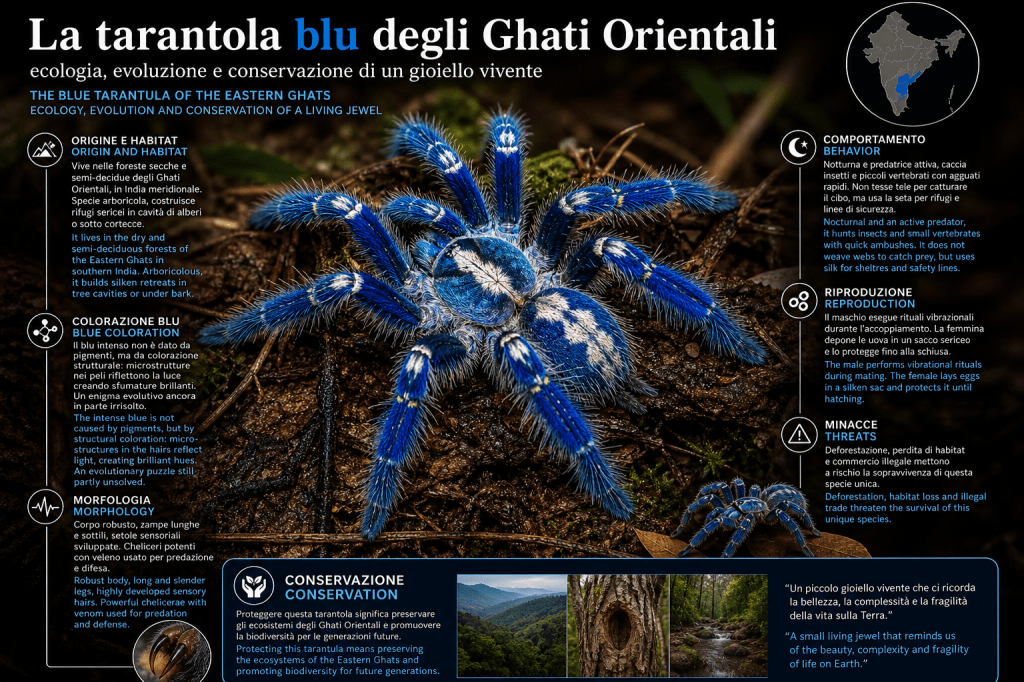
Nel panorama della biodiversità globale, pochi organismi riescono a suscitare una combinazione così intensa di meraviglia, timore e fascino quanto le tarantole tropicali. Tra queste, le specie caratterizzate da una colorazione blu intensa rappresentano un’eccezione evolutiva straordinaria, un’anomalia cromatica che sfida le regole comuni della pigmentazione animale. La cosiddetta “tarantola blu degli Ghati Orientali” è diventata negli ultimi anni un simbolo della fragilità degli ecosistemi forestali dell’India meridionale e un esempio emblematico di come la bellezza naturale possa diventare un motore per la conservazione.
In the panorama of global biodiversity, few organisms evoke such a powerful blend of wonder, fear, and fascination as tropical tarantulas. Among them, species characterized by an intense blue coloration represent an extraordinary evolutionary exception, a chromatic anomaly that challenges the common rules of animal pigmentation. The so-called “blue tarantula of the Eastern Ghats” has become in recent years a symbol of the fragility of southern India’s forest ecosystems and an emblematic example of how natural beauty can become a driver for conservation.
Origine geografica e habitat / Geographic origin and habitat
Questa tarantola è strettamente associata alle foreste secche e semi-decidue degli Ghati Orientali, una catena montuosa meno conosciuta rispetto agli Ghati Occidentali ma ugualmente importante dal punto di vista ecologico. Il suo habitat naturale è caratterizzato da temperature elevate, variazioni stagionali marcate e una vegetazione che alterna periodi di abbondanza a fasi di stress idrico.
La specie è tipicamente arboricola, vivendo all’interno di cavità di alberi o sotto cortecce sollevate, dove costruisce rifugi sericei complessi. Questo stile di vita la distingue da molte altre tarantole terrestri e influenza profondamente il suo comportamento e la sua morfologia.
This tarantula is closely associated with the dry and semi-deciduous forests of the Eastern Ghats, a mountain range less known than the Western Ghats but equally important from an ecological standpoint. Its natural habitat is characterized by high temperatures, marked seasonal variations, and vegetation that alternates between abundance and periods of water stress.
The species is typically arboreal, living inside tree cavities or under lifted bark, where it builds complex silk retreats. This lifestyle distinguishes it from many other terrestrial tarantulas and deeply influences its behavior and morphology.
Colorazione blu: un enigma evolutivo / Blue coloration: an evolutionary enigma
La colorazione blu intensa non deriva da pigmenti tradizionali, ma da un fenomeno noto come colorazione strutturale. Le microstrutture presenti nei peli della tarantola riflettono la luce in modo selettivo, producendo tonalità blu brillanti visibili da diverse angolazioni. Questo meccanismo è simile a quello osservato nelle ali delle farfalle Morpho o nelle piume di alcuni uccelli tropicali.
Dal punto di vista evolutivo, il vantaggio di questa colorazione non è ancora completamente compreso. Alcuni ricercatori ipotizzano che possa avere un ruolo nella comunicazione intra-specifica o nel mimetismo tra foglie e ombre, mentre altri suggeriscono una funzione legata alla selezione sessuale.
The intense blue coloration does not derive from traditional pigments but from a phenomenon known as structural coloration. Microstructures present in the spider’s hairs reflect light selectively, producing brilliant blue tones visible from different angles. This mechanism is similar to that observed in the wings of Morpho butterflies or the feathers of certain tropical birds.
From an evolutionary standpoint, the advantage of this coloration is not yet fully understood. Some researchers hypothesize that it may play a role in intraspecific communication or mimicry among leaves and shadows, while others suggest a function related to sexual selection.
Morfologia e adattamenti / Morphology and adaptations
La tarantola blu presenta un corpo robusto, con zampe lunghe e sottili adattate alla locomozione verticale. Le setole sensoriali, estremamente sviluppate, permettono di percepire vibrazioni minime nell’ambiente circostante, rendendo l’animale un predatore altamente efficiente.
Le cheliceri sono potenti e dotate di ghiandole velenifere, utilizzate sia per la predazione che per la difesa. Il veleno, pur non essendo generalmente letale per l’uomo, può causare dolore intenso e reazioni sistemiche.
The blue tarantula has a robust body, with long and slender legs adapted for vertical locomotion. Its highly developed sensory hairs allow it to detect minimal vibrations in the environment, making it a highly efficient predator.
The chelicerae are powerful and equipped with venom glands, used both for predation and defense. The venom, while not generally lethal to humans, can cause intense pain and systemic reactions.
Comportamento e strategia predatoria / Behavior and predatory strategy
Questa specie è principalmente notturna e caccia attivamente insetti e piccoli vertebrati. Utilizza una combinazione di agguato e rapidità fulminea per immobilizzare la preda. A differenza di molte tarantole terrestri, non costruisce ragnatele per catturare il cibo, ma usa la seta principalmente per creare rifugi e linee di sicurezza.
Il comportamento difensivo è particolarmente interessante. Quando minacciata, la tarantola può assumere posture intimidatorie, sollevando le zampe anteriori e mostrando le cheliceri, oppure fuggire rapidamente nel suo rifugio.
This species is mainly nocturnal and actively hunts insects and small vertebrates. It uses a combination of ambush and lightning-fast movements to immobilize prey. Unlike many terrestrial tarantulas, it does not build webs to capture food but uses silk mainly to create shelters and safety lines.
Its defensive behavior is particularly interesting. When threatened, the tarantula may adopt intimidating postures, raising its front legs and displaying its chelicerae, or it may quickly retreat into its shelter.
Riproduzione e ciclo vitale / Reproduction and life cycle
Il ciclo vitale della tarantola blu è relativamente lungo rispetto ad altri artropodi. Le femmine possono vivere diversi anni, mentre i maschi hanno una vita più breve, spesso limitata al periodo riproduttivo.
Durante l’accoppiamento, il maschio esegue complessi rituali vibrazionali per evitare di essere scambiato per una preda. Dopo la fecondazione, la femmina depone le uova in un sacco sericeo che protegge con grande attenzione fino alla schiusa.
The life cycle of the blue tarantula is relatively long compared to other arthropods. Females can live for several years, while males have a shorter lifespan, often limited to the reproductive period.
During mating, the male performs complex vibrational rituals to avoid being mistaken for prey. After fertilization, the female lays eggs in a silk sac, which she carefully protects until hatching.
Minacce e conservazione / Threats and conservation
La sopravvivenza di questa specie è fortemente minacciata dalla distruzione dell’habitat, in particolare dalla deforestazione e dall’espansione agricola. Inoltre, la sua bellezza la rende oggetto di traffico illegale nel commercio di animali esotici.
La conservazione di questa tarantola richiede un approccio integrato che includa la protezione degli habitat naturali, la sensibilizzazione delle comunità locali e il controllo del commercio illegale.
The survival of this species is heavily threatened by habitat destruction, particularly deforestation and agricultural expansion. Additionally, its beauty makes it a target for illegal trade in exotic pets.
Conservation of this tarantula requires an integrated approach that includes the protection of natural habitats, awareness among local communities, and control of illegal trade.
Conclusione / Conclusion
La tarantola blu degli Ghati Orientali rappresenta molto più di una semplice curiosità zoologica. È un simbolo vivente della complessità evolutiva, della fragilità degli ecosistemi e della necessità urgente di preservare la biodiversità. Studiare e proteggere questa specie significa non solo salvaguardare un organismo unico, ma anche comprendere meglio i delicati equilibri che regolano la vita sulla Terra.
The blue tarantula of the Eastern Ghats represents much more than a simple zoological curiosity. It is a living symbol of evolutionary complexity, ecosystem fragility, and the urgent need to preserve biodiversity. Studying and protecting this species means not only safeguarding a unique organism but also gaining a deeper understanding of the delicate balances that govern life on Earth.

 458socom.org
Rispondi